


A fuel tanker seal has to do more than close an access point. It must fit the hardware, withstand the operating environment, carry controlled identification, and come with documentation that matches the exact product and application.
Request a quote for your tanker seal requirements.
To buy iso 17712 certified seals for fuel tankers, verify the seal model's product-level certification first. Then confirm access-point fit, dimensions and material, serial-number control, removal method, order quantity, and the certificate package your team needs.
That distinction matters because certification for a company or a different seal does not establish certification for the seal you are ordering. A practical buying review should connect the tanker fitting to the specified seal, then connect the serial range and supporting records to your control process. Start with the checks below before requesting a quote, and use STiER's general ISO 17712 seals buyer checklist for adjacent certification context.
What Should Buyers Verify Before They Buy ISO 17712 Certified Seals for Fuel Tankers?
Before you buy ISO 17712 certified seals for fuel tankers, verify the exact product, the access point it will secure, and the documentation tied to that model. A seal can be appropriate for one closure and unsuitable for another. The purchase decision should therefore begin with the tanker hardware and operating process, not with a broad certification label.
Does the seal match the tanker access point?
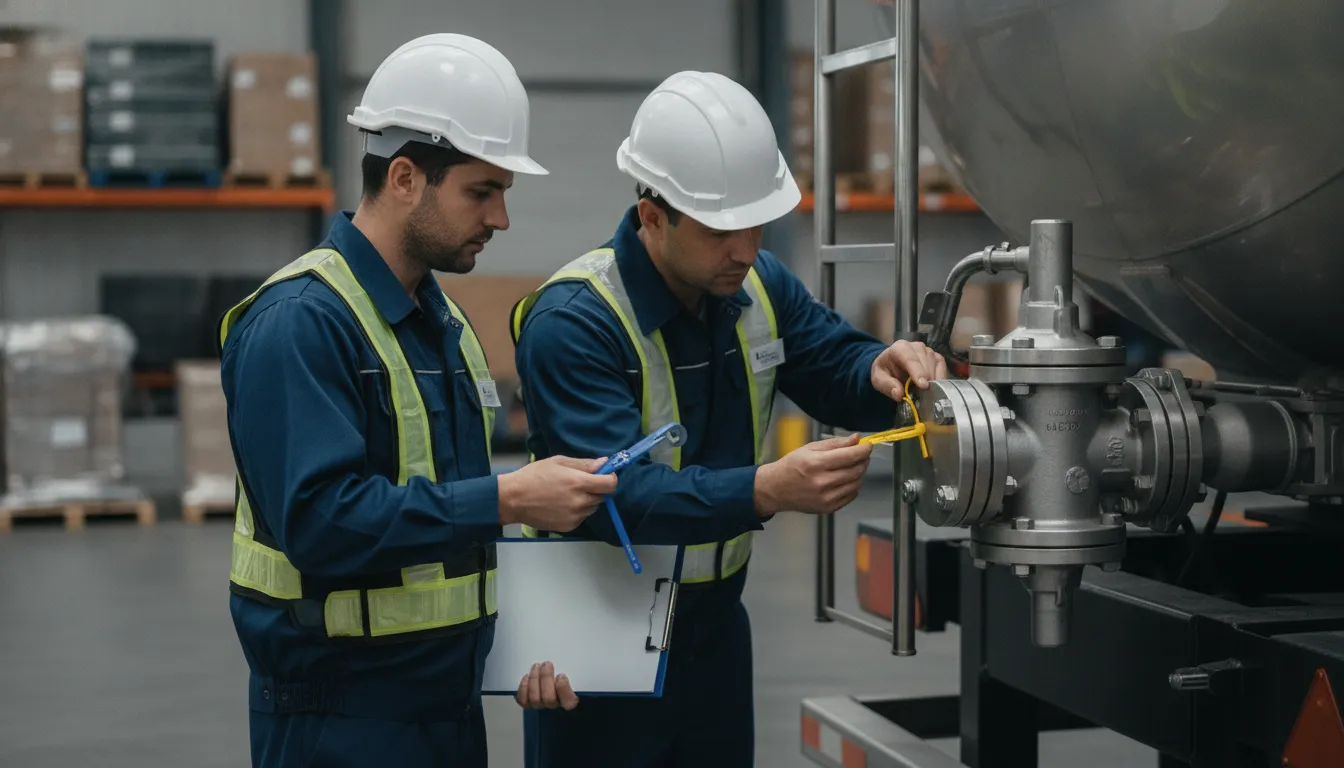
Start by documenting where the seal will be applied: a loading hatch, discharge valve, cabinet, or another secured opening. Record the available attachment path, clearance, required length, cable or bolt format, material needs, and how authorized personnel must remove it. This application-level check matters because CBP defines covered containerized cargo as merchandise in an enclosed container or trailer capable of accepting a seal. That definition does not establish that every seal design fits every tanker closure. For application planning, review STiER's tanker and bulk cargo security applications.
Is the certification tied to this exact model?
Ask the supplier for product-specific evidence, including the model identifier, applicable standard, certificate or test documentation, and any limitations. Do not treat a company certification, a different product's certificate, or a generic catalog statement as proof for the seal you intend to order. The KB-listed CSL-1.8, for example, is described as a cable seal for tanker and bulk-cargo access points. But its product information does not establish that the model is ISO 17712 certified. It should not be represented as certified without authoritative documentation.
CBP guidance says that, after an inspection, its officers affix an ISO/PAS 17712-compliant high-security bolt seal. Separately, FAST guidance says high-security seals should follow ISO guidelines for freight-container mechanical seals and expects C-TPAT participants to follow procedures and standards for high-security seals. Those references provide useful compliance context, but they do not replace verification of the exact seal model and use case. For broader context, compare this purchase review with the general ISO 17712 seals buyer checklist.
How Does ISO 17712 Apply to a Fuel Tanker Seal Purchase?
ISO 17712 matters when a tanker seal purchase supports a high-security cargo program, but the standard is not a substitute for checking the actual application. Fuel tankers may have valves, hatches, compartments, or other access points with different attachment requirements. The seal must fit the designated point, support your operating procedure, and come with documentation that identifies the exact model being supplied.
What does the ISO and CTPAT context establish?
U.S. Customs and Border Protection guidance says C-TPAT importers, carriers, and qualifying manufacturers must follow procedures and standards for high-security seals. Its FAST guidance calls for high-security seals in accordance with ISO guidelines for freight-container mechanical seals. Separately, CBP's sealing policy states that, after an inspection, its officers apply an ISO/PAS 17712-compliant high-security bolt seal. The policy also specifies that the CBP seal carries a unique alphanumeric serial number. Read the CBP sealing policy for the authoritative context.
These requirements connect certification with a broader control system. Your team should be able to identify which seal was issued, verify the number against shipment records, and document how discrepancies are handled. The CTPAT seal requirements and documentation guide provides related operational context for those procedures.
Does ISO context certify every tanker seal?
No. A reference to ISO/PAS 17712, a supplier's company-level credentials, or certification for one product does not establish that every bolt or cable seal is certified. Ask for product-linked evidence that names the exact model, applicable standard or edition, and relevant testing or certification details. If the documentation does not support the claim, describe the product by its verified construction and application instead of calling it ISO 17712 certified.
For a purchase review, match the certificate package to the seal on the quote, then confirm the serial format, dimensions, material, removal method, and tanker access point. That approach keeps compliance language accurate while giving operations and procurement teams a clear basis for approving the order.
Which Seal Design Fits a Fuel Tanker Access Point?
The access point determines whether a seal is practical. Before selecting a product, confirm the opening, available clearance, attachment path, inspection routine, and removal process. A seal that fits a valve stem may not suit a hatch or another tanker connection. Review CTPAT-compliant tanker cable seals alongside the requirements for your specific application.
How do bolt and cable seals differ at the point of use?
Bolt seals can provide a rigid, highly visible closure where aligned holes and sufficient clearance are available. Cable seals are more adaptable when the cable must pass through offset holes, valve hardware, or irregular attachment points. That flexibility does not remove the need to verify dimensions and the exact product documentation.
STiER lists the CSL-1.8 for tanker and bulk-cargo access points. Its listed configuration uses a 1.8 mm cable, 220 mm length, 230 kg breaking strength, tool-required removal, and laser marking with a unique serial number. Optional 304 or 316 stainless cable and custom lengths are listed, with custom lengths subject to a 1,000-piece minimum. These are listed product details, not a blanket certification statement. The available KB information does not establish that the CSL-1.8 itself is ISO 17712 certified. So buyers should request and review exact-model certification before treating it as a certified high-security seal.
| Consideration | Bolt seal | Cable seal |
|---|---|---|
| Best fit | Aligned holes with clearance for a rigid closure. | Offset, irregular, or flexible attachment paths. |
| Inspection | Visible body and matching serial control. | Visible cable entry, body, and matching serial control. |
| Removal | Often requires a dedicated cutter or tool. | Tool-required removal should be confirmed for the model. |
| Certification check | Verify the exact model and certificate. | Verify the exact model and certificate. |
For valve-specific inspection practices, see tamper-evident tanker valve seals. Include the access-point photos or dimensions, preferred material, serial format, removal tools, quantity, and compliance documentation needed in your quote request. This makes it easier to compare a bolt or cable design against the actual tanker operation rather than choosing from a generic seal category.
What Should a Tanker Seal Specification Include?
Build the specification around the access point
A useful specification gives the supplier enough detail to match the seal to the tanker, not merely a product category. Make certification and recordkeeping requirements explicit before requesting a quote.
- Identify the access point. Name the valve, hatch, compartment, or other closure that will be sealed. Include a photo or drawing when the fitting is unusual, and explain how the seal will be applied in normal operations.
- Record dimensions and material requirements. Provide the maximum cable or body length, diameter, clearance, and any required flexibility. State whether the application needs standard steel or a specified stainless-steel material, and note exposure to weather, chemicals, heat, or washdown conditions.
- Define the serial format. Specify whether each seal needs a unique sequential or randomized alphanumeric number, barcode, QR code, or another identifier. Confirm how the number must appear in inventory records and shipping documentation. CBP guidance calls for procedures that verify seal numbers and maintain a log of numbers issued and used: review the FAST seal requirements for the applicable control expectations.
- Set marking and customization requirements. List the company name, logo, warning text, color, or other marking needed for identification. Ask whether the marking method will remain legible through handling and whether the supplied documentation identifies the exact model and production batch.
- Describe the removal method. State whether removal must require cutters, a specialized tool, or another controlled process. Explain who is authorized to remove the seal and how removed or damaged seals will be recorded.
- State the quantity and delivery structure. Give the initial quantity, expected recurring usage, locations receiving stock, and any packaging or lot-separation requirements. This helps align the quote with inventory control rather than a one-time shipment.
- List the required documents. Request the product specification, exact-model certification evidence where applicable, batch or lot traceability, and any care or application instructions. Also confirm which seal details must appear on manifests, bills of lading, or electronic cargo records. Requirements should be tied to the product supplied, not assumed from a supplier-level certification.
Send STiER your tanker seal specifications and request a quote.
How Should Teams Control Seal Numbers and Records?
Seal control is an operating process, not just an inventory count. Before seals reach a tanker loading point, define who can access them, who may apply them, and which records must be completed at each handoff. This creates a traceable connection between the seal, the vehicle or access point, the shipment, and the person responsible for application.
How should unused seals be stored and issued?
Keep unused seals in a locked cabinet, safe, or other secure location until they are needed. Restrict access to employees responsible for inventory and application, and designate trained, trusted personnel to apply seals. A controlled process should record the seal number when it is issued, the person receiving it, the intended tanker or access point, and whether the seal was used, voided, damaged, or returned. CBP guidance also calls for controlled access and random issuance rather than sequential issuance, where that procedure applies to the operation.
What should the serial log match?
The serial log should match the shipment record, not sit apart from it. Record the seal number with the tanker or trailer identifier, loading date, route or shipment reference, and the relevant manifest, bill of lading, or electronic cargo record. At receipt, the carrier or receiving team should compare the physical marking and seal condition with the documents. CBP guidance says carriers should confirm that seal information is true and correct against shipment documentation, and that systems should verify seal numbers and cargo details when practical.
For a deeper process, review these serialized seal tracking and audit records practices and the guidance on security seal vendor documentation records.
How should teams handle a discrepancy?
Define the response before an exception occurs. A mismatched number, broken seal, missing seal, unexpected marking, or unexplained inventory gap should trigger a documented hold. The response should include supervisor notification, inspection, and escalation to the responsible security or compliance lead. Record what was found, who reported it, the shipment involved, and the disposition. CBP guidance calls for procedures to report discrepancies or anomalies related to seal integrity. Consistent reporting makes the record useful for investigation and review.
Which Documents Should a Supplier Provide With the Order?
A compliant-looking seal is not enough for a controlled tanker operation. The order should arrive with documentation that connects the product, its specifications, and its traceable production or shipment records. That package gives procurement, security, and compliance teams a defensible record of what was ordered and what was received.
What should the certificate package identify?
Ask the supplier to identify the exact seal model, revision or part number, applicable standard, and the scope of any certification or test documentation. A company-level quality certificate, a certificate for another seal, or a general statement about ISO 17712 does not establish certification for the model selected for your tanker. Request product-linked documentation that names the relevant model and, where applicable, the certificate or test reference supporting the claim.
The package should also state the ordered configuration, including dimensions, material, marking method, and any approved options. This matters when a tanker program uses different seals for valves, hatches, or other access points. For cable seals, record the specified length and construction rather than relying on a generic product description.
How do batch records support traceability?
Request the lot or batch identifier, production or shipment reference, and serial-number range supplied with the order. STiER describes certificate packages and documentation support that can include batch traceability and product-linked certification records. Confirm which records are supplied for the specific shipment and how discrepancies should be reported.
CBP guidance for C-TPAT and FAST participants calls for procedures covering high-security seals, verification of seal numbers, and documentation of pertinent seal information. It also says manufacturers should maintain logs of seal numbers issued and used, while manifests, bills of lading, or other cargo records should include relevant seal details. See the security seal vendor documentation records guide for a deeper records checklist.
Which records should remain with the order file?
Retain the quote and approved specification, purchase order, packing list, certificate package, batch or lot records, serial-number range, and receiving verification. Match those records to the exact model and quantity received. For broader context on certification questions, review the ISO 17712 buyer checklist, then confirm tanker-specific documentation before approval.
These records do not replace your internal seal log or application procedures. They provide the supplier-side evidence needed to connect the physical seals in inventory to the documented requirements for your operation.
How Can Buyers Prepare a Quote Request for Tanker Seals?
A useful quote request gives the supplier enough detail to match the seal to the tanker operation, access point, and compliance records. Before you ask to buy ISO 17712 certified seals for fuel tankers, gather the information below and identify which requirements are mandatory versus preferred.
Describe the access point and operating environment
- Application: Identify the tanker, hatch, valve, meter, or other access point being secured. A photo or simple dimensional sketch can clarify the fit.
- Dimensions: Provide the required cable or seal length, diameter, opening size, and clearance around the attachment point.
- Material and conditions: Note exposure to fuel, moisture, salt, chemicals, abrasion, heat, or cold. If stainless steel, nylon coating, or another material is preferred, state why.
- Removal: Explain whether authorized staff will use a tool, cutters, or a controlled manual process to remove the seal during inspection or unloading.
Define identification, quantity, and records
- Serialization and marking: Specify the serial format, numbering range, barcode or other identification needs, and whether company marking is required.
- Quantity and delivery: Give the initial quantity, expected recurring usage, delivery region, and any shipment or packaging requirements.
- Certification and documentation: Request product-level certification or test records for the exact model under consideration, plus batch traceability and records needed for your seal-control process. Company credentials alone do not establish certification for a particular seal.
For additional application context, review CTPAT-compliant tanker cable seals and tamper-evident tanker valve seals before sending your specifications.
Request a tanker seal quote with your specifications
Frequently Asked Questions
Does every seal used on a fuel tanker need ISO 17712 certification?
No. Verify the requirement for the specific cargo movement, access point, and seal type. ISO 17712 certification applies to the exact product model and its supporting documentation. Not automatically to every seal sold by a certified company or every seal used on a tanker.
What information should I provide when requesting a tanker seal quote?
Provide a description or image of the access point, required seal or cable dimensions. Material and environmental requirements, removal method, quantity, serial-number format, marking needs, delivery location, and documentation requirements. These details allow the supplier to evaluate fit and prepare a useful quote.
How should tanker seal numbers be controlled?
Limit access to stored seals, assign responsibility for issuing and applying them, and record each number against the vehicle, compartment, access point, shipment, and date when practical. Compare the recorded number with the seal received and report discrepancies before the load moves.
Which documents should accompany an ISO 17712 seal order?
Ask for product-level certification or test documentation that identifies the exact model, along with batch or lot traceability and any available material or marking specifications. Keep those records with your purchasing and seal-control files so the product and its documentation can be matched during review.
Ready to Request a Tanker Seal Quote?
A clear quote request helps match the seal design, serialization, documentation, and fit requirements to your fuel-tanker application. Share the access-point details, expected quantity, and records your team needs reviewed. Our team can help you organize the specifications before you place an order.
Request a quote or discuss your tanker seal requirements with STiER.