


CTPAT seal requirements for bolt seals, cable seals, and CBP acceptance are straightforward at the product level but demanding at the program level. Importers must use an ISO 17712 high-security seal on loaded containers and trailers bound for the United States, then control, inspect, record, and investigate every seal throughout the shipment. The hardware matters, but a certified seal alone does not create a compliant process.
Request a quote for serialized, ISO 17712 high-security seals and the documentation your team needs.
This guide explains what CBP accepts, when to select a bolt seal or cable seal, and what evidence procurement and compliance teams should retain. For the broader program context, use STiER's complete guide to CTPAT cargo seal compliance alongside this product-selection guide.
What CTPAT seal requirements does CBP accept?
CBP accepts seals classified as high security under ISO 17712 for loaded containers and trailers bound for the United States. Bolt seals are the standard choice for compatible container doors. High-security cable seals can be appropriate when the equipment cannot accept a bolt seal, provided the exact model is independently certified.
CTPAT is a voluntary trade-security partnership administered by U.S. Customs and Border Protection. Participating companies agree to meet security criteria across their supply chains. For seals, the central requirement is not a brand name or a particular color. It is the use of a seal that meets or exceeds the current ISO 17712 high-security standard, backed by controlled procedures.
ISO 17712 separates mechanical seals into indicative, security, and high-security classifications. For loaded containers and trailers covered by CTPAT criteria, the relevant classification is high security. Low-cost plastic indicative seals may help with internal inventory control, but they are not substitutes for certified high-security hardware on a CTPAT-controlled international load.
CBP evaluates the complete seal-control process
CBP validation is broader than checking whether a seal looks strong. A reviewer can examine how seals are purchased, stored, issued, applied, inspected, recorded, replaced, and reconciled. Written procedures should define who may access seal inventory, how unique serial numbers are assigned to shipments, and what happens when a number does not match the shipping documents.
The same process should address compromised or missing seals. If a seal is replaced, employees need a defined escalation path and a record of the original number, replacement number, reason for replacement, and people involved. These controls help turn a physical device into an auditable chain-of-custody record.
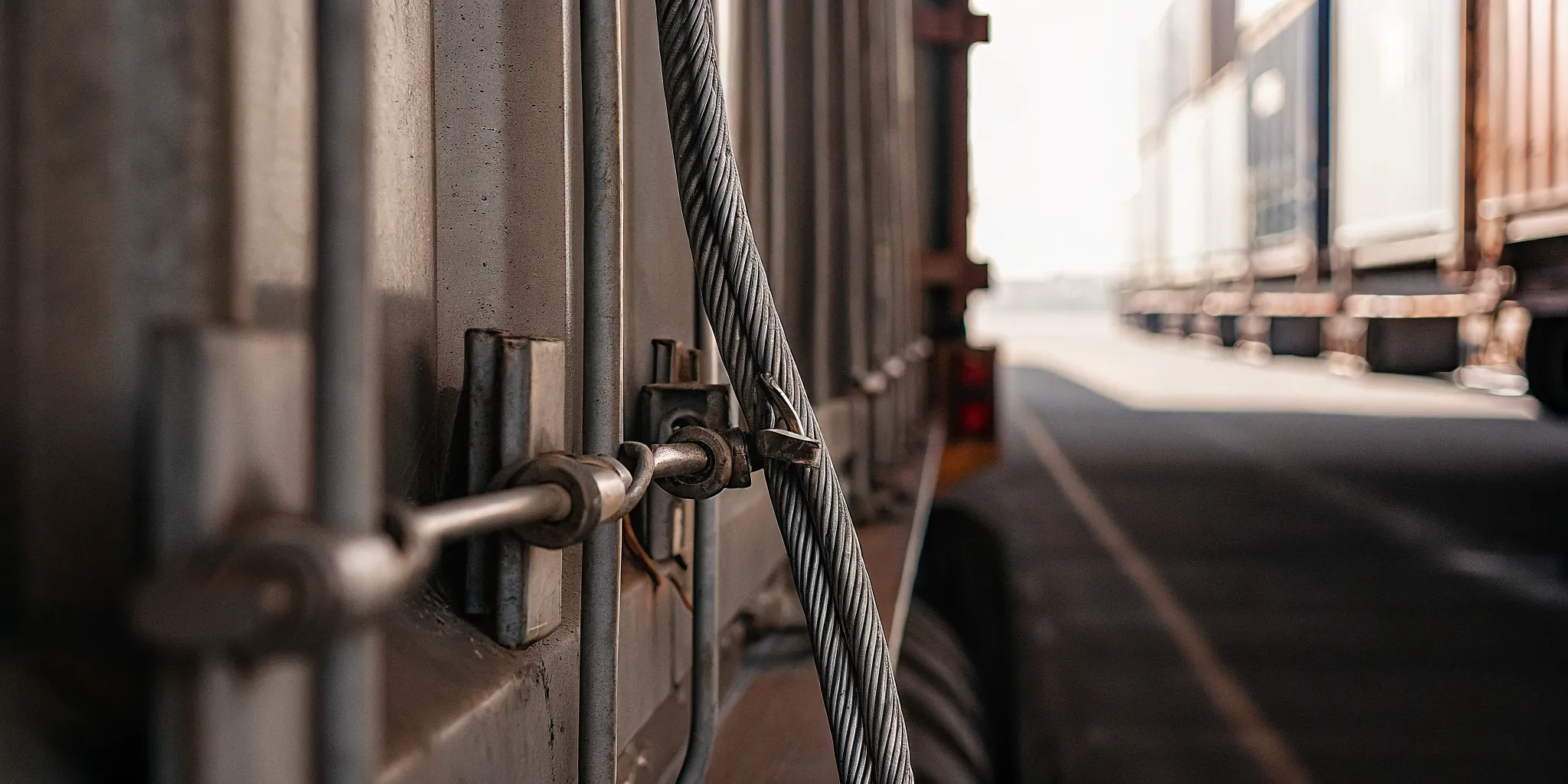
High-security bolt seals vs. cable seals: which do you need?
Choose the seal around the equipment, route, and operating process. A bolt seal is normally the first choice for standard ocean containers and compatible trailer doors. A cable seal provides flexibility where latch geometry, multiple locking points, or specialized equipment makes a rigid bolt impractical. In either case, confirm the exact model's classification before purchase.
| Decision factor | High-security bolt seal | High-security cable seal |
|---|---|---|
| Typical fit | Standard container and trailer door hasps | Irregular latches or multiple locking points |
| Form | Rigid metal bolt and locking body | Flexible steel cable and locking body |
| Application | Insert bolt through aligned hasps and lock | Route cable through the approved locking points and cinch |
| Removal | Usually requires a bolt cutter | Requires an appropriate cable-cutting tool |
| Procurement check | Verify ISO 17712 high-security certification for the model | Verify ISO 17712 high-security certification for the model |
When bolt seals are the practical default
Bolt seals provide a visible, rigid barrier at the door hasp. Their familiar form simplifies training across ports, carriers, and receiving teams. They are also easy to specify with unique serial numbers and paired markings on the bolt and locking body. STiER's high-security bolt seal is designed for container and trailer applications where the locking hardware accepts a rigid bolt.
Operational fit still matters. Teams should confirm hasp dimensions, removal tools, receiving procedures, and the expected environmental conditions. A certified bolt seal that employees cannot apply correctly or safely remove is not the right operational choice.
When cable seals solve a fit problem
Cable seals can pass through latches that do not align for a bolt. They may also secure equipment with more than one locking point. Procurement teams should specify the required cable length and diameter, then verify that the exact configuration remains within the supplier's high-security certification. Changing a component or size without confirming certification can create an avoidable compliance gap.
Do not assume every steel cable seal is high security. Some are classified only as security seals. Ask for the independent test documentation tied to the model and configuration you intend to order.
ISO 17712 certification is the non-negotiable requirement
ISO 17712 provides a common framework for classifying mechanical seals and testing their resistance to opening or failure. For CTPAT purposes, the supplier should be able to show that an independent laboratory tested the exact seal model and classified it as high security. A general statement that a supplier sells compliant products is not enough for a defensible procurement file.
What independent testing should cover
High-security classification is based on defined mechanical testing, including resistance to tensile, shear, bending, and impact forces. ISO 17712 also addresses tamper-evidence practices. These tests do not make a seal impossible to defeat. They create a consistent threshold and help users identify unauthorized access through inspection and control procedures.
Request a current certificate or test report that clearly names the manufacturer and model. Check whether the document applies to the actual bolt or cable seal being quoted. If the supplier offers several similar models, do not treat documentation for one model as proof for all of them.
Certification does not replace inspection
Even the strongest seal must be inspected. CTPAT guidance promotes a structured seal check that verifies the seal is correctly seated, compares the serial number with shipping records, pulls on the seal to confirm it is locked, and twists or turns it to identify abnormal movement. Employees should know what a normal seal looks and feels like before they are asked to detect tampering.
Train receiving teams to stop when a seal number differs from the manifest, the seal is missing, or the locking body shows unusual damage. The procedure should protect the load, notify the right people, document the condition, and preserve evidence before normal unloading continues.
What documentation must your seal vendor provide?
A qualified vendor should make compliance evidence easy to retrieve before an audit or validation. Start with independent ISO 17712 documentation for the exact model. Then retain the product specification, serialization format, purchase records, and any instructions covering correct application and removal.
- Model-specific ISO 17712 evidence: A current certificate or test report naming the exact seal.
- Product specifications: Dimensions, material, marking options, and intended applications.
- Serialization details: Confirmation that each seal receives a unique, readable identifier.
- Quality controls: Information showing how production consistency and traceability are managed.
- Ordering records: Quotes, purchase orders, quantities, and lot or batch information when available.
- Support contacts: A clear route for questions, discrepancies, and replacement orders.
Keep supplier records with your internal seal procedures, training logs, seal inventory, and shipment-level seal logs. Centralized records reduce the time required to answer validation questions and help procurement avoid buying an unverified substitute during an urgent reorder.
What belongs in an internal seal log?
A practical log records the unique seal number, shipment or container number, date and time of application, employee applying the seal, inspection result, and receiving confirmation. For any replacement, record both numbers, why the change occurred, who authorized it, and who participated. Reconcile unused inventory regularly so missing seals are investigated rather than ignored.
How should teams apply and inspect CTPAT seals?
Consistency is more important than complexity. Build a short procedure that trained employees can follow at the loading point and again at receipt. The following sequence creates a repeatable operational control:
- Inspect the locking hardware. Confirm the door, hasp, and latch show no unexplained damage.
- Match the seal to the record. Compare the unique serial number with the shipment documents before application.
- Apply the seal correctly. Follow the manufacturer's instructions and confirm the seal is fully locked.
- Verify and document. Check the number again, test that the seal is secure, and record the employee, time, and shipment.
- Inspect at handoffs. Compare the number and condition whenever responsibility for the load changes.
- Escalate discrepancies. Stop, secure the load, preserve evidence, and follow the written incident process.
Restrict unused seal inventory to authorized personnel. Issuing seals in controlled sequence and reconciling stock can expose missing or duplicated identifiers before a shipment reaches the border. Periodic observation of employees applying and inspecting seals also reveals training gaps that paperwork alone will not show.
Choosing a CTPAT-qualified seal supplier
The best supplier decision balances certification, product fit, traceability, service, and documentation. Start by asking for proof instead of relying on a product-page claim. Then test samples on the actual equipment and confirm that operators can apply, inspect, and remove them using approved tools.
Questions to ask before issuing a purchase order
- Is the exact quoted model independently classified as ISO 17712 high security?
- Can you provide the supporting documentation promptly?
- Will every seal carry a unique, durable serial number?
- Can the bolt and locking body carry matching identifiers where required?
- What customization and volume-order options are available?
- How do you manage quality and traceability across production runs?
- Who helps investigate a discrepancy or urgent replacement need?
STiER Security Seals provides serialized bolt seals, cable seals, and related cargo-security solutions for B2B logistics and compliance teams. Its DoubleLock affiliation, ISO 9001 quality-management positioning, and focus on ISO 17712 high-security products support buyers who want to consolidate products and compliance documentation with one specialized vendor. Pricing is quote-based and can reflect specification, customization, and volume.
The supplier is one part of the control environment. Your team remains responsible for maintaining written procedures, training employees, protecting seal inventory, and documenting each shipment. Use the CTPAT cargo seal compliance guide for importers and exporters to connect product selection with the broader program.
Frequently asked questions about CTPAT seals
Does CBP require a bolt seal on every container?
CBP's CTPAT criteria require an ISO 17712 high-security seal on loaded containers and trailers bound for the United States. A bolt seal is the standard choice for compatible container door hardware. A qualifying high-security cable seal may suit equipment that cannot accept a bolt seal. Document why the selected type fits the equipment and confirm the exact model's certification.
Can a cable seal meet CTPAT requirements?
Yes. A cable seal can support CTPAT compliance when the exact seal model is independently certified as ISO 17712 high security and used under documented seal-control procedures. Not every cable seal qualifies, so check model-specific evidence rather than relying on appearance or material alone.
What records should a CTPAT seal log include?
Record the unique seal number, date and time of application, shipment or container number, person applying the seal, inspection results, changes or replacements, and the people involved in any replacement. Reconcile unused inventory and investigate missing seals.
What should I request from a seal supplier?
Request current independent ISO 17712 test documentation for the exact model, evidence of quality controls, serialization details, ordering specifications, and support for investigating discrepancies. Retain those records with your written procedures and training documentation.
Build a stronger CTPAT seal program with STiER
A defensible program begins with the correct certified hardware and continues through controlled storage, trained application, structured inspection, and complete records. STiER helps logistics, procurement, and compliance teams select serialized high-security seals that fit their equipment and documentation needs.
Request a quote from STiER for bolt seals, cable seals, customization, and compliance documentation.