


Valve closures, tanker hatches, and flexible cargo doors rarely offer the clean locking points found on a standard container hasp. This guide explains cable seal applications for valve security, tanker hatches, and flexible cargo. The right cable seal follows the closure. It remains visible for inspection and gives authorized teams a traceable way to detect interference.
Request a cable-seal quote for your application
Application summary: Cable seals fit irregular closure points when a rigid bolt cannot follow the route.
How Should You Evaluate Cable Seal Applications for Valve Security, Tanker Hatches, and Flexible Cargo?
A cable seal is often the better fit when closure points are irregular, offset, recessed, or difficult to align with a rigid bolt. It can pass through valve handles, hatch fittings, doors, or flexible containment points and leave the locking body visible for inspection. Select the exact seal by closure geometry, strength, environment, identification process, and compliance documentation.
The application advantage is flexibility, not a promise that every cable seal suits every asset. A fixed-length design may work where the route is repeatable. An adjustable or custom-length format may be more useful when hatch sizes, valve arrangements, or flexible cargo closures vary. In either case, the seal should sit taut without damaging hardware or creating slack that lets the cable move away from the intended points.
For the broader selection framework, review STiER's security seal buying guide. The decision should account for application, recording, inspection, removal, and reconciliation, not only the seal body.
What makes cable routing different from bolt placement?
A bolt seal is straightforward when two aligned openings accept a rigid pin and body. Cable routing can work around a bend or connect points at different angles. That matters at valves, meter covers, tanker hatches, flexible doors, and other access points where a straight line is unavailable. Route through the points that control access, not around an easily bypassed component.
Before ordering, photograph or measure representative hardware, record the intended path, and confirm where the locking body will rest. This preparation helps procurement avoid selecting a cable length or diameter based only on a product name. It also gives drivers and warehouse employees a repeatable application method.
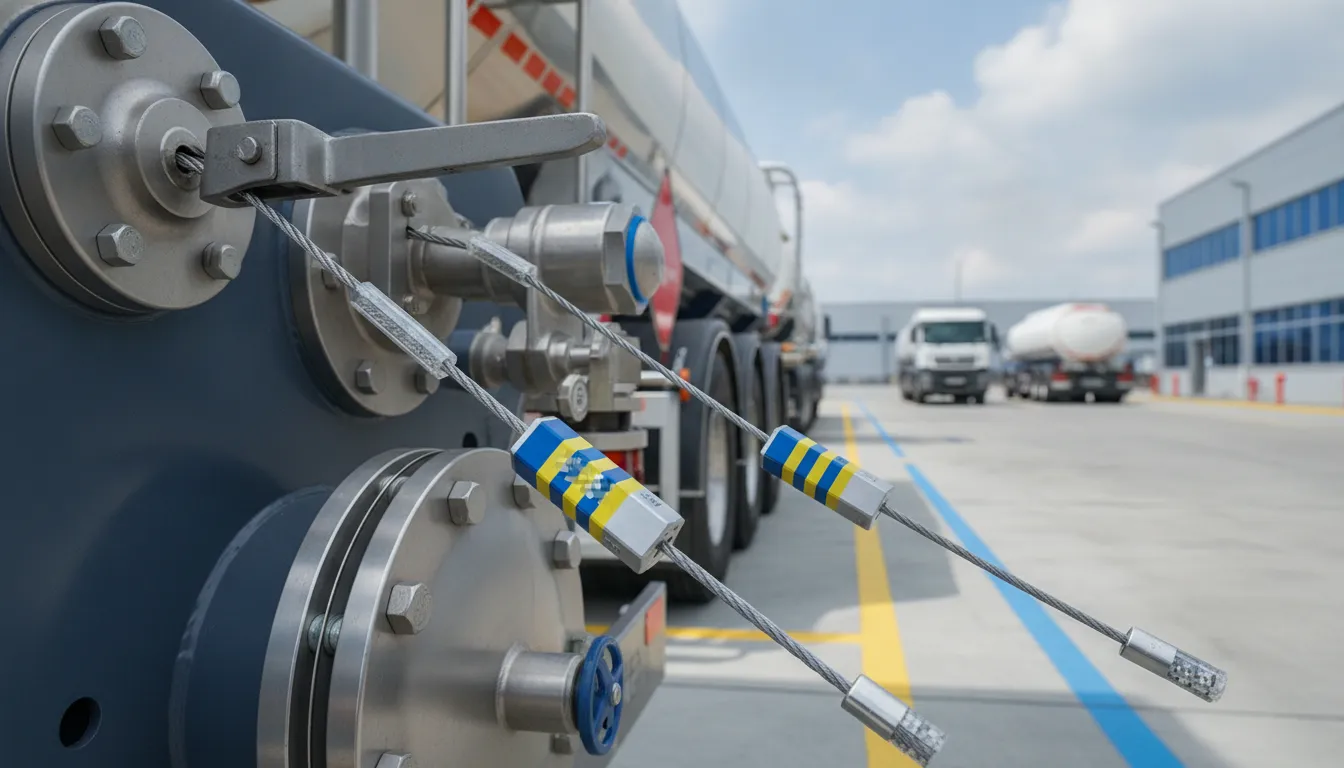
How Do Cable Seals Secure Valves, Meters, and Irregular Closure Points?
Cable seals secure irregular closure points by creating a visible, tamper-evident connection between access hardware and a fixed point. The cable can pass through a valve handle and stationary body, a meter enclosure, a hatch latch, or a recessed fitting. Once closed, opening the protected point should require removal or disturbance of the seal, making the condition easier to inspect at handoff.
What routing pattern should an operator use?
Start with the points that must remain together during transport or controlled storage. Route the cable through a valve handle and stationary body, or through corresponding openings in a hatch, meter enclosure, or closure bracket. Keep the path direct enough for an inspector to understand. Avoid unnecessary loops, sharp bends, moving machinery, and excess slack.
The locking body should remain accessible and identifiable. Do not bury it behind a guard, place it where vibration can strike it, or route the cable so the closure can open without disturbing the seal. If the hardware does not create a meaningful barrier, change the closure control or request an application review. A different seal cannot correct a damaged, loose, or bypassable valve or hatch.
How should a serialized seal be inspected?
Inspection should connect the physical condition of the seal to a shipment, vehicle, tanker, or asset record. Authorized personnel should confirm that the cable remains in the intended route, the locking body is intact, and the full identifier matches the dispatch or receiving record. A broken cable, altered body, unexpected slack, missing marking, or mismatched number should trigger documented review before access is authorized.
Serialization supports accountability, but it does not replace access control. Define who may issue, apply, inspect, remove, and reconcile seals. Use the same sequence at dispatch, transfer, arrival, and authorized opening. For CTPAT participants, written procedures and audit records are part of the broader security program.
Ask STiER to review the routing and identification needs for your closure points
What Should Tanker Operators Check When Sealing Hatches?
A tanker hatch application must fit the closure, withstand its handling environment, and leave a reliable record for the next inspection. Confirm the route, material, identification, and removal process before ordering. Use the checklist below as planning guidance, then compare the proposed product with its current documentation and your company's procedure.
- Confirm closure points. Identify every opening the cable must pass through, including the hatch hasp, valve handle, eyes, and fixed attachment point. Confirm that the route prevents access without disturbing the seal.
- Measure the path. Record distance, bends, access limitations, and the position where the locking body will sit. Select enough length for secure application, but avoid excessive slack.
- Review exposure. Consider outdoor storage, routine handling, bulk transport, moisture, chemicals, abrasion, and temperature. Ask the supplier to confirm construction and stated suitability.
- Record the identifier. Capture the complete serial number or approved marking in the shipment or inspection record before departure. Link it to the equipment, responsible person, and movement event.
- Apply through authorized personnel. Verify that the hatch or valve is closed. Route the cable through designated points and close the body according to product instructions.
- Inspect before release. Check that the cable is seated, the body is visible, the identifier matches the record, and there is no unexpected damage or slack.
- Inspect at handoff and arrival. Compare the number and physical condition with the record. Escalate a discrepancy under the documented incident procedure before opening the protected point.
An unusual hatch, chemical exposure, or repeat failure pattern deserves a documented application review before a volume-sensitive order is placed. The checklist separates general operating controls from product-specific claims.
When Does Flexibility Win Over a Bolt Seal for Cargo Containment?
A bolt seal is usually a strong choice when two closure points are aligned, close together, and designed for a rigid locking body. A cable seal can be more practical when the security path bends around a valve, passes through a recessed fitting, or connects points that shift slightly between equipment configurations. The right choice depends on fit, classification, inspection, and removal requirements.
| Application condition | Why a cable seal may help | When a bolt seal may fit better |
|---|---|---|
| Irregular or offset closure points | The cable follows the available path and connects separated hardware. | A bolt is simpler when hasps provide one direct opening. |
| Recessed valves or fittings | Flexible routing reaches points a rigid body cannot approach directly. | A bolt may work when the fitting exposes a standardized hole. |
| Flexible cargo doors or containment | Length and routing accommodate changing closure geometry. | A bolt is predictable when door hardware is rigid and consistent. |
| Aligned container or trailer hasps | A cable remains an option when the intended route is not straight. | A high-security bolt creates a direct barrier when certification fits. |
The decision is not simply cable versus bolt. It is whether the selected seal can be installed tightly, inspected consistently, and removed only through the authorized process. The underlying hatch, valve, door, or hasp must also be sound.
For a product-level comparison, compare bolt seals and cable seals by application. A procurement decision that works on one vehicle may not transfer to every tanker, trailer, or flexible container in the fleet.
What does flexible cargo containment require?
Flexible doors, flaps, bags, and other containment systems can change shape during loading and movement. The seal must pass through the points that control access while remaining visible to the next authorized inspector. Select the cable length for the real closure, not an idealized diagram. Establish a standard route for each recurring equipment type and document exceptions.
If closure points move enough to create damaging tension or large slack, reassess the hardware and application method. A cable seal should support tamper evidence without becoming a loose component that can be repositioned. Train the people who handle the equipment, and provide a clear escalation path when the standard route cannot be achieved.
How Do You Specify Cable Diameter, Material, and Identification?
A cable-seal specification should begin with the closure, not a catalog name. Document the points the cable must pass through, the route, required slack, and the locking-body position. This gives procurement and operations a practical basis for reviewing diameter, length, construction, marking, packaging, and order quantity.
Which fit details should procurement document?
Describe the valve, hatch, door, or flexible cargo closure, including openings, unusual angles, access limitations, and the required removal process. Specify enough length to pass through the closure and return to the body without avoidable slack. A fixed-length steel cable seal can suit a repeatable route. A custom length may be better when representative hardware varies.
STiER lists the Fixed Length Steel Cable Seal CSL-1.8 with galvanized steel aircraft cable. A 1.8 mm diameter, a 220 mm length, laser marking, and a stated 230 kg breaking strength. These details apply to that listed configuration, not every cable seal. Confirm current documentation and fit before ordering.
How should material and identification be evaluated?
State whether the seal will face routine handling, outdoor storage, bulk transport, moisture, abrasion, or other environmental conditions. STiER lists stainless steel 304 or 316 and nylon-coated cable options for certain configurations. Confirm availability, length, marking, and minimum order requirements for the exact product.
Identification is an operating control. Request sequential numbering, custom printing, barcodes, or other approved markings when the process requires traceability. Define who may issue, apply, record, inspect, and reconcile numbers. Pricing is quote-based and volume-sensitive because construction, length, marking, packaging, and quantity affect the final order.

How Do ISO 17712 and CTPAT Fit These Cable Seal Applications?
ISO 17712 and CTPAT address related but different parts of cargo security. ISO 17712 provides a framework for classifying and testing high-security seals. CTPAT is a broader supply-chain security program that expects controlled access, appropriate application, inspection, and documentation. A cable seal supports those controls only when its exact classification, application, and records match the shipment requirement.
What should a compliance review confirm?
Ask the supplier to identify the exact product documentation supporting the requirement. Confirm whether the selected model is classified as high security, whether relevant testing applies to that configuration, and whether the cable diameter, body, and length fit the closure. Do not infer certification from the words cable seal, serialized seal, or tamper-evident seal alone.
U.S. Customs and Border Protection publishes guidance on ISO 17712 high-security seals and recommended seal procedures and best practices. Use authoritative guidance alongside current program requirements, customer instructions, and lane-specific controls.
CTPAT controls extend beyond the product. Restrict seal access, train authorized employees, record serial numbers, inspect seals at handoffs, and maintain records for review. A cable seal is one part of a layered security process, not a substitute for the full program.
Request a documented cable-seal recommendation from STiER
FAQs: What Do Buyers Ask About Cable Seal Applications?
Buyers usually need to resolve four questions before ordering: whether the seal fits the closure. How it will be routed and inspected, what identification is required, and whether the exact model supports the applicable security program. The answers below provide a starting point for an application review, not a substitute for product documentation.
Are cable seals suitable for tanker valves and hatches?
They can be suitable when the cable passes through the points that control access and remains taut, visible, and inspectable. Confirm closure geometry, length, material, removal method, and product documentation. A cable seal does not automatically meet an ISO 17712 requirement, so verify the exact model before use on a regulated lane.
When should a company choose a cable seal instead of a bolt seal?
Choose a cable format when closure points are offset, recessed, irregular, or too far apart for a rigid bolt to align cleanly. A bolt may be better for standardized container or trailer hasps with a direct opening. Compare the hardware, application route, inspection process, and required certification.
What information should a buyer provide for a cable-seal quote?
Provide photographs or measurements of the closure, intended routing path, required length and diameter, environment, marking or serialization needs, packaging quantity, and any ISO 17712 or customer requirement. Explain how seals will be applied, inspected, recorded, and removed so the quote reflects the real specification.
Does serialization make a cable seal CTPAT compliant?
No. Serialization supports traceability, but CTPAT is a broader supply-chain security program. Participants also need controlled access, written procedures, trained personnel, inspection practices, and reliable records. Verify the exact seal classification and documentation, then incorporate it into the company's current CTPAT procedures.
Contact STiER to discuss cable seal applications for your fleet or cargo program.