


When logistics teams compare global cargo security standards, ISO 17712, and regional requirements, the key question is not whether one seal is accepted everywhere. It is how a common product standard interacts with each customs authority, security program, carrier, and route. This guide explains what ISO 17712 does, where regional rules add controls, and how to build a documented program without treating a voluntary standard as a universal law.
Request a customized quote for a multi-region cargo seal program.
For a practical starting point, review STiER's security seal guide for shipping containers. Then use the comparison below to separate four questions that are often mixed together: What does the seal do? Which program applies? What does the local customs authority require? What evidence must the shipper retain?
Is ISO 17712 a Global Cargo Security Standard?
ISO 17712:2013 is an international standard for classifying, accepting, and withdrawing mechanical freight container seals. It creates a shared technical language for seal performance and tamper evidence, but it does not replace customs law or membership rules. A shipment can therefore use an ISO 17712 seal and still need route-specific records, authorization, markings, or inspection procedures.
The standard describes three barrier-capacity classes:
- Indicative, or I: primarily provides evidence that a closure was opened or disturbed.
- Security, or S: provides a higher physical barrier than an indicative seal.
- High Security, or H: is designed for the strongest mechanical barrier classification in the standard.
ISO 17712 also addresses more than a letter stamped on a product. Buyers should examine the exact model, test evidence, tamper-indicative features, identification method, and manufacturing security controls. The ISO 17712 standard page identifies the current published edition and its scope. Because ISO publishes the standard itself for purchase, ask a supplier for the applicable certificate or test report rather than assuming a product-page statement proves compliance.
The most important distinction is standard versus obligation. ISO 17712 is the technical reference. CTPAT, Partners in Protection, the European Union customs framework, HMRC, a carrier, or a local customs authority may make that reference part of an operating requirement. That is why the same H-class bolt seal can be useful across multiple lanes without creating one worldwide rule.
How Do US and Canadian Seal Requirements Compare?
In the United States and Canada, high-security seal expectations are closely connected to trusted-trader programs. CTPAT and Canada's Partners in Protection program both emphasize a high-security seal, documented procedures, number control, and response to discrepancies. The practical overlap is strong, but the governing program, shipment scope, and evidence request still need to be checked separately.
| Program or lane | What official guidance emphasizes | What a shipper should retain |
|---|---|---|
| US CTPAT | CTPAT shipments that can be sealed should use a high-security seal meeting or exceeding the current ISO 17712 standard. | Model-specific conformity or laboratory evidence, seal number records, application checks, and discrepancy procedures. |
| Canada PIP | PIP members use seals meeting or exceeding current PAS/ISO 17712 high-security requirements for applicable imported, exported, and in-transit cargo. | Written seal policy, inventory and issuance records, training, anomaly investigations, and disposal controls. |
CBP's CTPAT Minimum Security Criteria describes high-security seals, placement, and the VVTT inspection process: view, verify, tug, and twist. It also says qualifying bolt and cable seals can be used. This is an operational control, not simply a purchasing specification.
Canada's CBSA cargo seal guidance states that PIP members must meet or exceed PAS/ISO 17712 high-security requirements and maintain written controls over seals. It also distinguishes reusable high-security padlocks for limited domestic pickup situations from the high-security seal needed for cross-border shipments. The correct choice depends on the movement, conveyance, and program profile.
How Do EU and UK Customs Rules Treat Security Seals?
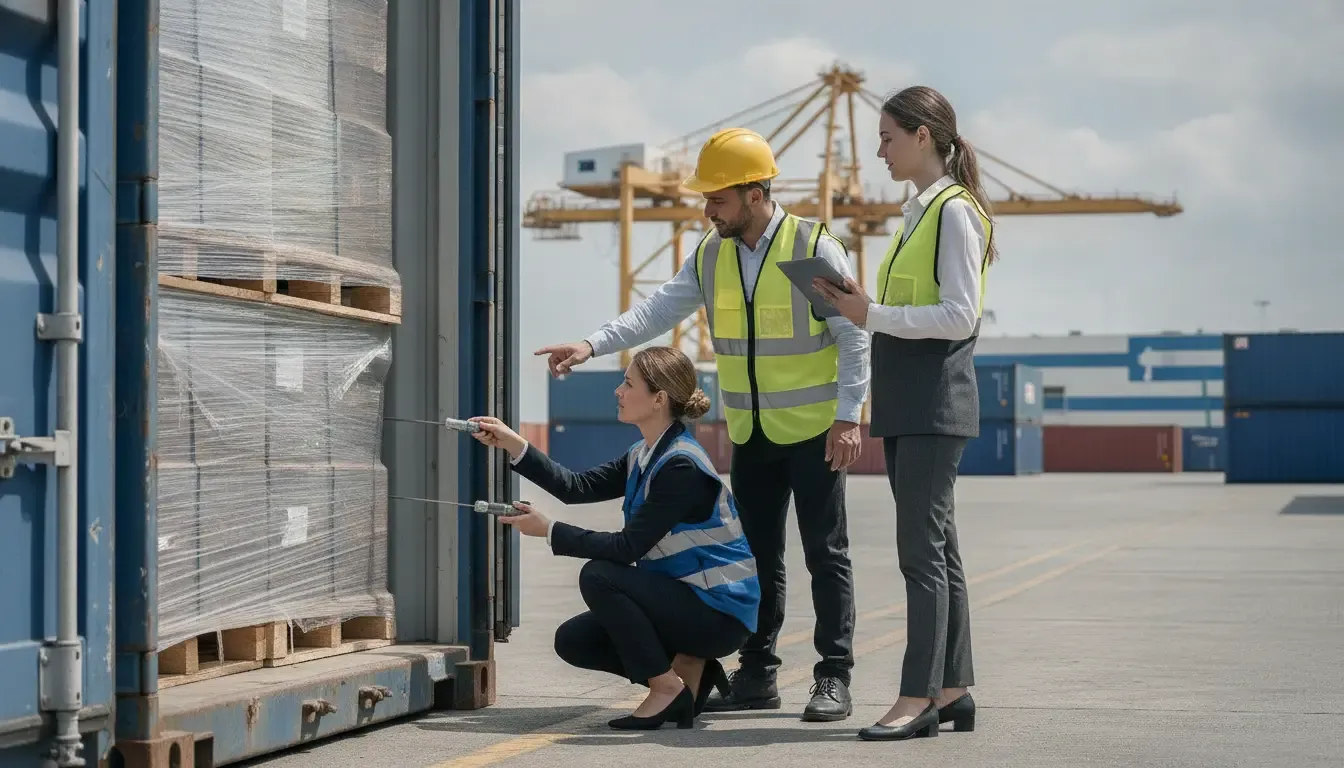
European customs rules show why buyers should not equate a commercial security seal with an official customs seal. EU customs rules describe characteristics such as unique identification, visible evidence of tampering, durability, and checkability. They also provide that seals certified under ISO 17712:2013 by a competent body are deemed to fulfill the listed characteristics, while containerized transport should use high-security features as widely as possible.
Under Article 301 of Commission Implementing Regulation (EU) 2015/2447, a customs seal has additional identity requirements, including the word Customs or an abbreviation and a country code for the Member State where it is affixed. The rule also addresses resealing after a customs inspection. A shipper should therefore record whether a seal is a customs-issued seal, an authorized trader seal, or a commercial seal used for internal security.
The United Kingdom follows a similarly layered approach. HM Revenue and Customs explains that an official customs seal may be indicative and may be applied in addition to a trader's commercial seal. Authorized traders that use their own seals must control stock, record serial numbers, secure sealing equipment, and show seal marks and numbers on accompanying documents. The HMRC guidance on official customs seals and trader sealing recognizes ISO 17712:2013 and notes its recognition among Common Transit Convention countries.
For procurement teams, the lesson is precise: ask the broker, customs office, or transit procedure whether the shipment needs an official customs seal, an approved trader seal, or a commercial seal that supports chain of custody. ISO 17712 can help establish technical suitability, but it does not grant authorization to substitute a trader seal for an official seal.
What Changes Across Latin American and Caribbean Routes?
Latin America and the Caribbean do not operate under one regional seal rule. Requirements can come from national customs regulations, regional transit arrangements, port or terminal procedures, ocean carriers, and customer security programs. A seal accepted on one corridor may need different documentation, markings, or approval on another. Route-by-route confirmation is more reliable than a blanket regional claim.
The WCO SAFE Framework provides an international policy baseline for secure and facilitated trade, including customs-business cooperation and mutual recognition concepts. It does not function as a single seal approval for every country. Local authorities still decide how those principles enter national procedures.
Bolivia illustrates the point. A 2024 regulation circulated by the Aduana Nacional describes requirements for customs seals and other cargo-security measures, including unique identification and technical parameters based on ISO 17712 for high-security mechanical seals. That example is useful because it shows how a national authority can adopt or reference ISO concepts while adding its own registration, approval, and control process.
On Caribbean and Latin American lanes, build a corridor matrix before ordering:
- Origin, destination, transshipment ports, and final mode of transport.
- Customs regime, trusted-trader membership, and any authorized-consignor or consignee status.
- Carrier and terminal seal rules, including acceptable class, format, placement, and advance documentation.
- Local requirements for seal identifiers, language, customs markings, or replacement after inspection.
- Evidence needed when a seal is broken, replaced, missing, or reported with a number mismatch.
STiER's Caribbean and Latin American route article provides additional route context. Use it as a planning input, then confirm the current carrier and authority requirements for the specific movement.
Get a customized quote for serialized bolt or cable seals matched to your routes.
How Can One Seal Program Serve Multiple Regions?
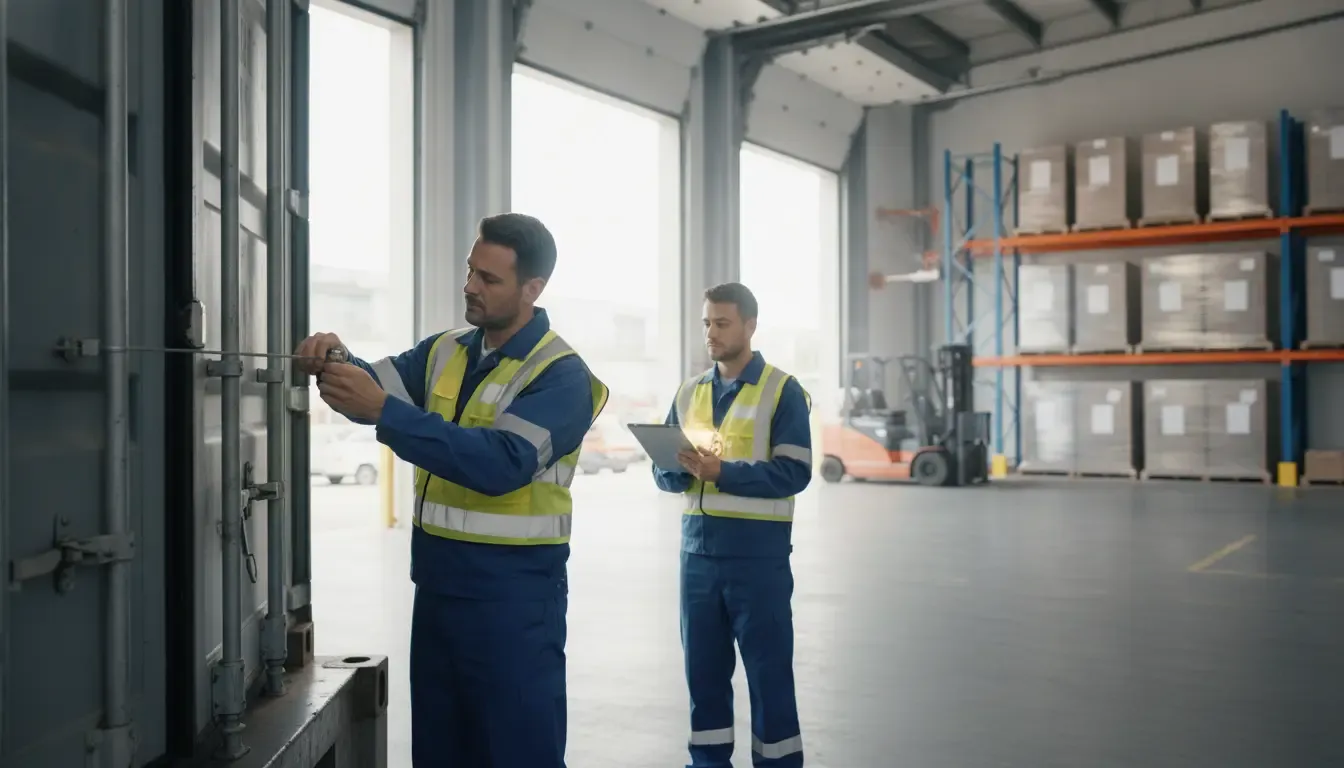
A multi-region program works when it standardizes the controls that should be common and leaves room for regional exceptions. Start with the highest applicable security and documentation baseline for containerized international movements, then create exceptions only when a local authority, carrier, conveyance, or risk assessment requires a different seal or process.
- Map the routes. List every country, customs regime, carrier, terminal, mode, and handoff. Do not group a direct sailing and a transshipment route if their controls differ.
- Assign the obligation. Label each requirement as law, customs procedure, trusted-trader rule, carrier rule, customer contract, or internal policy. This prevents an internal preference from being presented as a government mandate.
- Set the seal baseline. Specify class, design, material, serial format, application point, removal method, and container compatibility. For CTPAT or PIP shipments, confirm whether H-class ISO 17712 seals are required.
- Control the numbers. Keep receiving, issuance, application, transfer, replacement, removal, and disposal records. Restrict inventory access and reconcile used and unused seals.
- Define exception handling. Document who may remove a seal, how a replacement number is recorded, who is notified, and when a shipment is held for investigation.
- Review on a schedule. Recheck carrier notices, customs guidance, trusted-trader criteria, and supplier certificates before a major lane or product change.
This model avoids two expensive mistakes. The first is buying a low-barrier seal for a shipment that needs high-security evidence. The second is over-standardizing and assuming every country accepts the same commercial seal without additional authorization. A central policy with a controlled regional annex is usually easier to train, audit, and update.
What Should You Ask a Multi-Region Seal Supplier?
Supplier due diligence should connect the product, the route, and the recordkeeping process. A quote is only useful when it identifies the exact seal and the evidence behind its claims. Ask questions that a receiving clerk, auditor, customs broker, and procurement manager can all use.
- Which exact model and class are proposed for each route?
- Does the test or conformity evidence identify that model, rather than only a product family?
- Which independent laboratory or certification body performed the relevant work, and what accreditation applies?
- How are serial numbers generated, controlled, and supplied in a traceable sequence?
- Will the seal fit the planned container, trailer, railcar, tanker, or other closure without unsafe slack?
- How will replacement, defective, returned, and destroyed seals be documented?
- What product, quality, and supplier records can be provided for an audit or customer review?
STiER positions its offering around serialized security seals, CTPAT and ISO 17712 considerations, ISO 9001 quality management, and DoubleLock affiliation. Buyers can use the security seal certification comparison to keep program participation, product performance, and supplier quality controls separate. For the technical ISO checklist itself, see STiER's ISO 17712 buyer checklist.
Contact STiER to review your routes and request a quote for the right security seals.
Frequently Asked Questions About Regional Seal Requirements
Does ISO 17712 automatically make a seal legal in every country?
No. ISO 17712 provides a technical standard for mechanical freight container seals. A country, customs regime, trusted-trader program, carrier, or terminal may adopt it, reference it, or add separate approval and recordkeeping requirements.
Do all international shipments require an H-class seal?
No universal rule applies to every shipment. CTPAT and PIP guidance require high-security seals for applicable program shipments, while other movements may have different customs, carrier, or risk requirements. Confirm the specific lane before selecting the class.
Is a commercial seal the same as an official customs seal?
No. A commercial seal supports shipper or carrier security controls. An official customs seal is applied or recognized under a customs procedure and can have its own markings, authorization, and removal rules.
What should happen if customs removes or replaces a seal?
Follow the applicable authority or transit procedure. Record the old and new seal numbers, the reason, the responsible party, the time and location, and the notification or inspection reference. Do not treat a replacement as an unrecorded inventory change.
Can one supplier support a global seal program?
One supplier can support multiple regions when its products, records, logistics, and documentation match the program. The buyer remains responsible for confirming local rules, carrier acceptance, and the evidence required on each corridor.
How Can You Build a Defensible Global Seal Program?
The strongest global cargo security standards program is not the one with the most labels. It is the one that matches each route's obligations to a verifiable seal, controlled serial numbers, trained handlers, and a documented response when something changes.
Request a route-specific security seal recommendation from STiER.