

Choosing trailer door locks for a commercial fleet is not just a matter of buying the heaviest lock available. The right choice has to fit the trailer door hardware, resist the attacks your operation is most likely to face, tolerate weather and road grime, and work with the inspection routine your drivers can follow every time.
Request a trailer security quote from STiER
Fleet managers should also separate two related controls: a physical lock protects the door or access point, while a serialized tamper-evident seal helps show whether the secured point was opened. A commercial security program often needs both. This guide explains how to compare the options without assuming that one design fits every trailer.
What Should Commercial Fleets Look for in Trailer Door Locks?
The best trailer door lock is the one that fits the trailer's latch geometry, raises the effort required to defeat the door, withstands the operating environment, and can be inspected consistently across the fleet. Start with the door and risk profile, then compare construction, lock coverage, key control, installation, and maintenance.
A useful fleet specification should answer these questions before a purchase:
- Which trailer door or latch design must the lock cover?
- Is the primary risk unauthorized door opening, full-trailer theft, or both?
- Will the hardware remain outdoors in rain, salt, dust, vibration, and temperature changes?
- Can drivers install and remove it without unsafe improvisation?
- Can supervisors inspect the lock and key inventory using one repeatable process?
- Does the program also require a serialized seal for tamper evidence and chain-of-custody records?
These questions prevent a common procurement mistake: choosing a lock by weight or marketing language while overlooking fit. A strong lock that cannot sit squarely over the intended latch may provide less practical protection than a properly fitted design with a clear operating procedure.
Which Trailer Door Lock Design Fits Your Fleet's Risk?
Trailer door locks vary in how they cover the latch, how much hardware they shield, and how easily they can be standardized. External cargo or container locks can add a visible barrier across the rear-door hardware. A discus-style padlock can secure a compatible hasp or cable. A kingpin lock addresses tractor-to-trailer connection theft, not the trailer doors, so it should be specified as a separate control.
| Fleet need | What to compare | STiER product context |
|---|---|---|
| Rear-door access protection | Latch coverage, clamping range, hardened construction, and fit verification | RHINO Ultra Duty Cargo Container Lock is documented for trailers and offers a 10.25 to 18 inch clamping range. |
| Portable protection across compatible assets | Weight, adjustment range, included lock, and ease of deployment | OX Container Lock Jr. Bundle is a lighter spring-tension option documented for trailers and includes a CRAB Discus Lock. |
| Door hardware using a hasp or cable | Shackle exposure, keyway protection, weather resistance, and correct hasp fit | CRAB Lock is a hardened-steel discus lock documented for trailers, cables, chains, gates, and outdoor equipment. |
| Full-trailer theft from a yard | Kingpin coverage and fleet yard procedures, separate from door access controls | LION Trailer Lock is a kingpin lock. It is not a substitute for a trailer-door lock or a tamper-evident door seal. |
STiER's commercial lock collection includes container locks, trailer locks, discus locks, and padlocks. Use the collection to identify a candidate family, then confirm the actual product dimensions and intended applications before standardizing it across mixed trailer types.
For a broader program, the OX, BULL, and RHINO model tiers can help organize procurement discussions. They are not interchangeable fit categories. OX is positioned as a more portable option, RHINO as an ultra-duty cargo lock, and BULL as a max-duty container lock with a container and storage focus. Treat the trailer's measured latch geometry and the manufacturer's documented application as the final compatibility checks.
How Do Attack Resistance and Visibility Affect Lock Selection?
Attack resistance is more than a single strength claim. Look for a design that reduces accessible cutting, prying, drilling, and manipulation points, uses hardened or corrosion-resistant materials where documented, and makes unauthorized access visibly difficult. A highly visible lock can also help communicate that the trailer is controlled, although no physical lock should be described as theft-proof.
When comparing commercial trailer door locks, inspect these design details:
- Coverage: Does the lock shield the latch or hasp rather than leaving the critical connection exposed?
- Material: Is the body made from hardened or heavy-duty steel appropriate to the application?
- Exposed points: Can a tool reach the shackle, lock body, fasteners, or latch from a practical angle?
- Keyway protection: Is the keyway protected from weather and direct manipulation?
- Deterrence: Is the lock easy for a driver or yard worker to recognize during an inspection?
- Removal control: Does the operating procedure identify who may remove the lock and where keys are controlled?
For example, STiER describes the RHINO as a one-piece, weather-resistant cargo lock made with high-grade hardened steel and designed for resistance to cutting, drilling, and corrosion. Those are useful documented attributes, but a fleet still needs a fit check on each trailer door configuration. The lock's construction cannot correct a poor installation or a door frame that does not accept its clamping range.
Get a customized lock and seal recommendation for your fleet
How Should Fleets Evaluate Weather Exposure and Service Life?
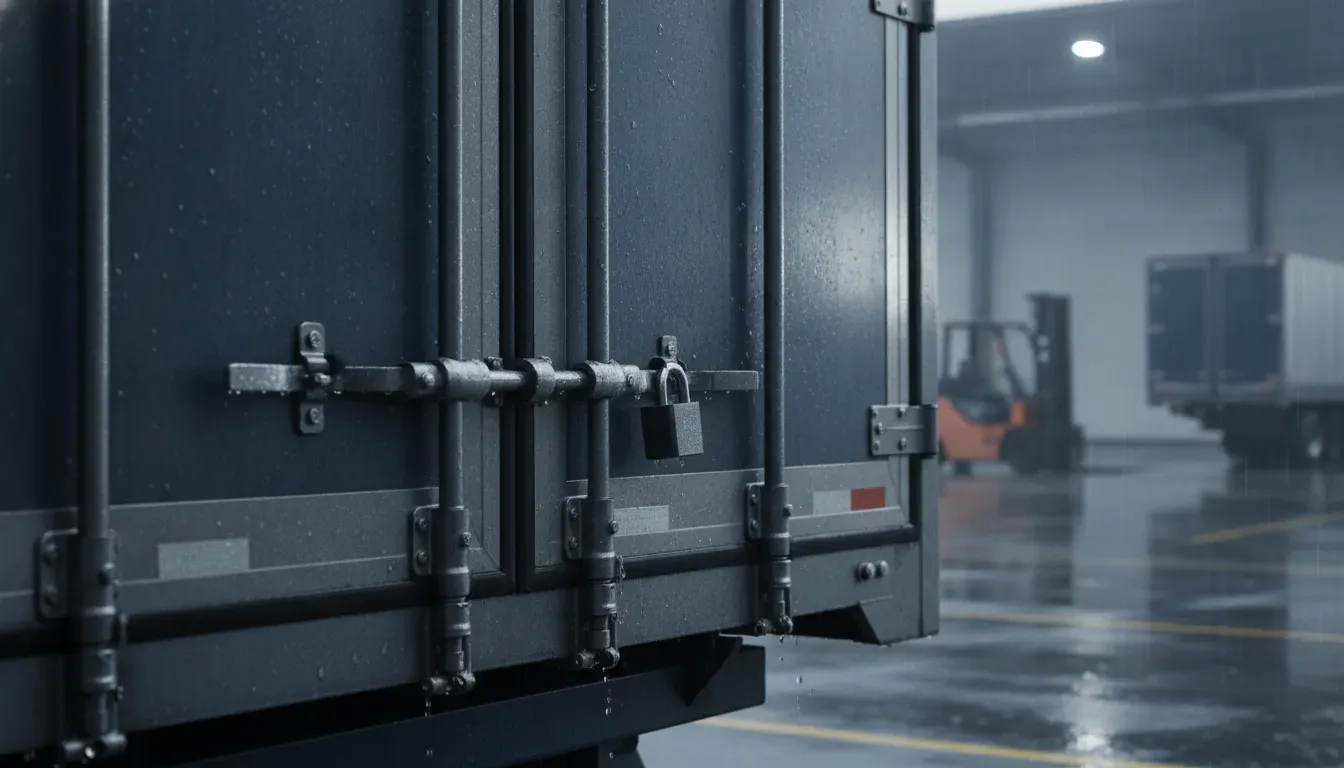
A trailer lock lives in the same environment as the trailer: road spray, dust, temperature swings, vibration, rain, and sometimes salt or coastal air. Weather resistance should therefore be evaluated as an operating requirement, not as a decorative feature. Ask how the body, fasteners, moving parts, and keyway will be inspected and maintained in your routes.
Build the evaluation around the actual fleet environment:
- Road conditions: Heavy spray and grit can work into exposed moving parts and keyways.
- Climate: Freeze-thaw cycles, heat, humidity, and coastal salt can accelerate corrosion.
- Storage: A lock left on a trailer in an open yard may need a different maintenance plan than one used only at a staffed dock.
- Cleaning: Confirm that routine trailer washing does not leave debris or chemicals trapped in the lock.
- Inspection: Define when workers check for corrosion, bent parts, missing hardware, or a key that no longer turns smoothly.
STiER documents weather-resistant construction for the RHINO, OX, BULL, and CRAB product families, with specific applications varying by model. That makes the model-level product page and a physical fit review important. Avoid writing a generic fleet specification that says weather-resistant without identifying the model, asset, route, inspection owner, and replacement trigger.
What Installation and Fleet-Standardization Checks Matter?
Installation is successful when the lock sits correctly, closes fully, and can be checked without forcing the door or the hardware. Before ordering a fleet quantity, measure a representative sample of trailer doors and document variations by trailer manufacturer, door style, latch arrangement, and model year.
Use this pre-purchase and deployment checklist:
- Measure the fit: Record the relevant latch, hasp, or door hardware dimensions and compare them with the candidate lock's documented range.
- Test closure: Confirm that the door can close and seal normally with the lock installed. Never accept a lock that requires a driver to bend or defeat the trailer hardware.
- Check access: Make sure authorized workers can operate the lock safely while keeping hands clear of pinch points.
- Test representative trailers: Include the oldest, newest, and most common configurations before fleet-wide adoption.
- Standardize keys: Decide whether the fleet needs one key per asset, a controlled key-alike program, or another documented custody method.
- Document ownership: Assign responsibility for issue, return, inspection, replacement, and incident reporting.
- Train the user: Show drivers and yard teams how to verify full engagement, identify damage, and escalate a mismatch.
Key control deserves special attention in a commercial fleet. A lock can be mechanically sound while the program around it is weak. Limit duplicate keys, record issuance where the risk warrants it, and keep an approved spare process so a driver is never encouraged to bypass a damaged lock.
The same principle applies to the lock itself. A product such as RHINO may be appropriate for demanding trailer, gate, marine, and utility applications, while a lighter OX bundle may be more practical for a compatible mixed-asset deployment. The correct selection is the one that meets the security requirement without creating a process workers will routinely ignore.
When Should a Door Lock Be Paired With a Tamper-Evident Seal?
A physical door lock and a tamper-evident seal solve different problems. The lock creates a barrier that makes unauthorized door access more difficult. The seal provides a unique identifier and visible evidence that the sealed point may have been opened or disturbed. Pair them when your operation needs both deterrence and a recordable access signal.
A layered trailer control can include:
- A trailer door lock for physical access protection.
- A serialized bolt seal or cable seal applied at the designated cargo access point.
- A seal log recording the seal number, trailer, load, driver, time, and authorized handoffs.
- A pre-trip and destination inspection that compares the seal and lock condition with the dispatch record.
- An escalation procedure for a broken seal, mismatched number, damaged lock, or unexplained door opening.
CBP's recommended seal procedures describe seal control and verification practices for supply-chain participants. ISO 17712 addresses mechanical seals and high-security seal classifications; it does not turn a trailer door lock into an ISO 17712 seal. Keep those controls and claims separate in training, procurement, and audit records.
STiER's trailer and transport seal collection includes high-security bolt seals and tamper-evident options for freight movement. For compliance context, see the ISO 17712 certification explanation. Select the seal type based on the cargo, access point, required evidence, and applicable program requirements, rather than using a seal as a replacement for a physical lock.
What Should a Trailer Lock Inspection Routine Include?
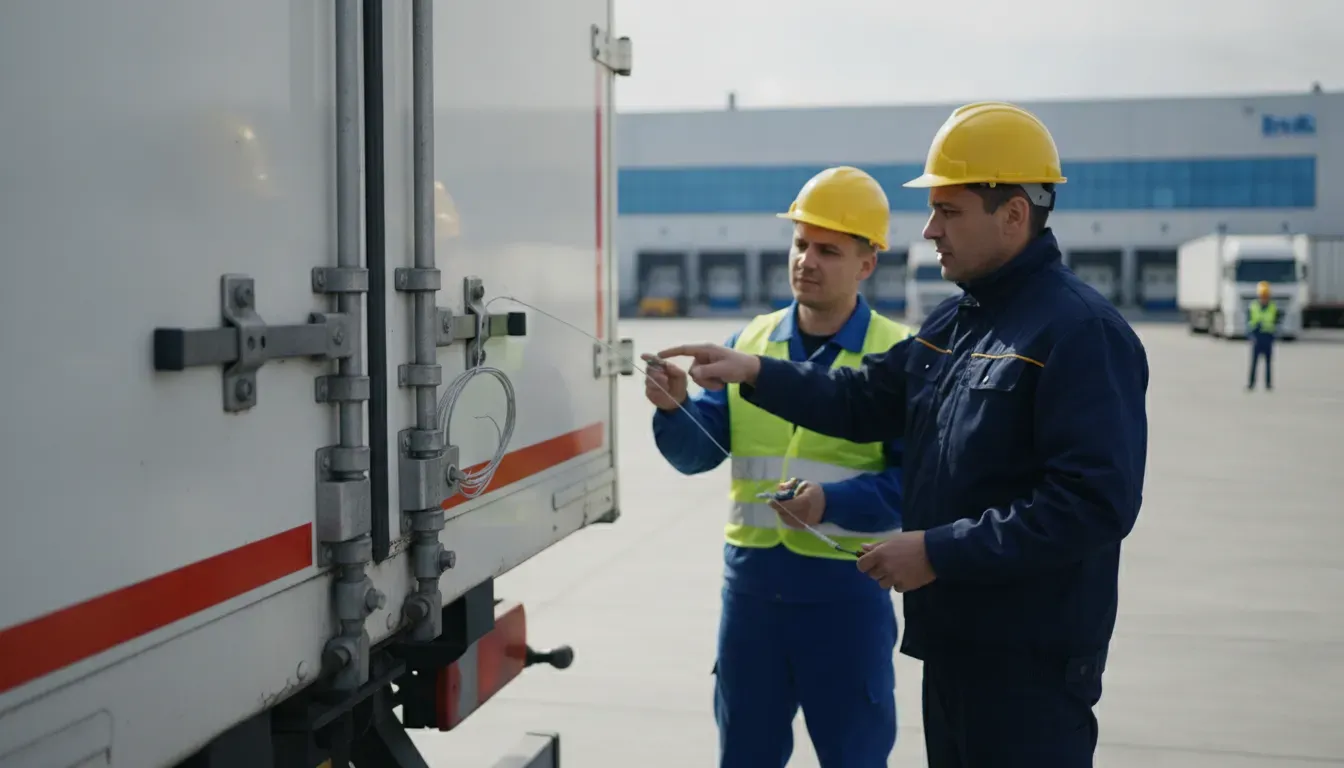
A repeatable inspection routine turns the lock from a standalone product into a fleet control. The routine should be short enough for drivers and yard teams to follow, but specific enough to identify a damaged lock, a mismatch, or an unapproved access event.
At minimum, inspect the following at dispatch and receipt:
- Lock body, housing, shackle, fasteners, and visible mounting or clamping points.
- Full engagement over the intended latch or hasp, with no unusual gap or forced alignment.
- Key operation and key custody, without forcing a key that binds.
- Trailer door and frame condition around the lock, including fresh pry marks or deformation.
- Seal presence, condition, and serial number against the dispatch or transfer record.
- Time, location, inspector, and any exception that requires escalation.
When an exception occurs, do not simply replace the seal and continue. Secure the trailer according to the fleet's incident procedure, preserve the relevant records, notify the responsible security or compliance owner, and document who authorized the next access. The exact response depends on the operation's risk plan and customer requirements.
Request a fleet-ready trailer lock and seal quote
Frequently Asked Questions About Trailer Door Locks
What is the best lock for a trailer door?
The best lock is the one that fits the trailer's door hardware, covers the vulnerable access point, matches the fleet's attack and weather risks, and can be inspected consistently. Verify dimensions and applications with the supplier before ordering for mixed trailer configurations.
Are trailer door locks universal?
No. Trailer doors, latches, hasps, and frame clearances vary. Treat a stated clamping range or product application as a starting point, then test the specific trailer configurations in your fleet before standardizing a lock.
Should a trailer use both a lock and a security seal?
Often, yes, when the operation needs both physical access protection and evidence of possible tampering. The lock and seal have different roles: the lock creates a barrier, while a serialized seal supports inspection and record keeping.
Is a kingpin lock the same as a trailer door lock?
No. A kingpin lock helps prevent unauthorized tractor connection and full-trailer theft from a yard. A trailer door lock protects the cargo access point. Fleets may use both, but they should not be specified or trained as interchangeable controls.
How do fleets maintain trailer door locks in bad weather?
Use a model documented for the environment, inspect for corrosion and damage, keep the keyway and moving parts clear of debris, and define a replacement or repair trigger. Route conditions and the manufacturer's maintenance guidance should determine the exact schedule.
How Can Your Fleet Standardize Trailer Door Security?
Start with a measured fit check, define the physical and tamper-evidence controls separately, and give drivers a simple inspection process. STiER can help fleet managers compare trailer-compatible locks, serialized seals, documentation, and quote-based supply options for commercial logistics programs.
Talk with STiER about a commercial fleet security quote
Use STiER's contact team to confirm fit before standardizing a fleet lock.