


When comparing indicative seals vs barrier seals, buyers are weighing two different security functions: recording evidence of access and creating a stronger physical obstacle to entry. The labels are useful starting points, but they are not universal performance ratings. Choose based on the cargo, access point, operating process, and applicable program requirements, then verify the exact product documentation.
Discuss your seal requirements
What is the difference between an indicative seal and a barrier seal?
An indicative seal is intended primarily to show whether an access point may have been opened or disturbed. It can support tamper-evident handling by giving staff a visible device to inspect and a seal identifier to compare with shipping records. It is not generally selected as a major physical barrier to forced entry.
A barrier seal is intended to do more than leave an indication. It is designed to resist unauthorized access through its construction and application, helping make entry more difficult and potentially more time-consuming. Barrier does not mean impenetrable. The seal remains one layer of a broader cargo-security process, and a determined intruder may attack the door, surrounding hardware, or another weak point instead.
In practice, sellers may use these terms differently. A buyer should ask what a particular device is designed to resist, what testing or certification applies, and how it is removed. Do not treat the word "barrier" as proof of a defined security grade. Where a standard or contract requires a specific class, check that the exact product and configuration meet it.
Terminology also changes across industries: in process-equipment regulations, a barrier-fluid seal system describes a different application from a cargo seal. For example, the EPA discussion of seal systems and barrier fluid addresses process equipment, not cargo-security seal selection.
Which security purpose does your shipment require?
Start with the consequence of unauthorized access. If the main need is to identify possible opening at a low-risk point, an indicative device may be appropriate. If the cargo, route, customer agreement, or compliance program calls for a more substantial physical deterrent, evaluate a high-security seal suited to the opening.
- Evidence of access: Is a clear visual indication and recorded identifier the main objective?
- Resistance to tampering: Must the device also make unauthorized removal or entry harder?
- Compliance: Does a customer, carrier, or supply-chain program specify a seal type, standard, or procedure?
- Inspection: Can staff see the seal and its identifier at every handoff?
- Removal: Is controlled cutting or another deliberate removal step suitable at destination?
Keep the security need tied to the access point. A seal on a container door, a trailer latch, a tote, and an internal bag may serve different roles. One device is not automatically the right choice for every location in a shipment. Review common seal applications alongside the cargo path, and consider how the seal will be checked at origin, transfer, and receipt.
How do the security levels compare?
The table below describes broad buying distinctions, not a substitute for a product specification. Actual performance depends on the design, material, installation, and the way the access point is protected. Confirm any claimed test result or certification against documentation for the exact seal model.
| Comparison point | Indicative seal | Barrier or high-security seal |
|---|---|---|
| Primary purpose | Show possible opening or interference | Show interference and add physical resistance |
| Typical construction | Often a lighter, tamper-evident design; examples include plastic pull-tight seals | Often a more robust design, such as a bolt or cable seal selected for the access point |
| Removal | May be cut or released according to the specific product design | Usually requires deliberate cutting or a compatible removal tool; confirm the product instructions |
| Best-fit consideration | Frequent checks, lower resistance needs, or internal control points | Cargo openings where greater resistance, documented control, or a defined requirement matters |
| What to verify | Identifier readability, tamper evidence, fit, and recording process | Exact specification, certification if required, fit, removal tools, and seal-number controls |
These are functional distinctions, not a claim that all devices in either column have the same strength. A bolt seal and a cable seal also differ in fit and application. For a separate comparison of those formats, see bolt seals versus cable seals. Select by access-point geometry and operating needs, not by category name alone.
When is an indicative seal the practical choice?
Indicative seals can make sense where the process needs visible evidence of access and a manageable inspection routine, while a substantial barrier is not the primary requirement. Common examples can include securing a bag, tote, cabinet, or internal package during a controlled movement. They can also help identify whether an access point has been disturbed between documented handoffs.
A plastic pull-tight seal illustrates this approach. STiER lists the Plastic Seal DS-F as an example buyers can review for a specific application. Check the product listing and current specifications for its configuration, fit, and removal method; do not infer characteristics that are not stated there. A useful seal is one that closes correctly, remains visible during transit, and can be checked consistently by the people responsible for it.
Before specifying an indicative seal, confirm that the closure can be applied without damaging the package and that the seal can be inspected without dismantling the load. Decide whether the device needs a unique number, a color, a barcode, or other identifiers, and determine who records that information. A seal without a reliable record may tell a receiver that something looks wrong, but it may not tell the team which device was applied or when.
When should buyers evaluate a barrier seal?
Evaluate a barrier-style or high-security option when the access point needs more physical resistance than a light indicative device provides. This is often a consideration for a container or trailer carrying cargo where unauthorized entry would have significant consequences, or where a program or customer specification sets a seal requirement.
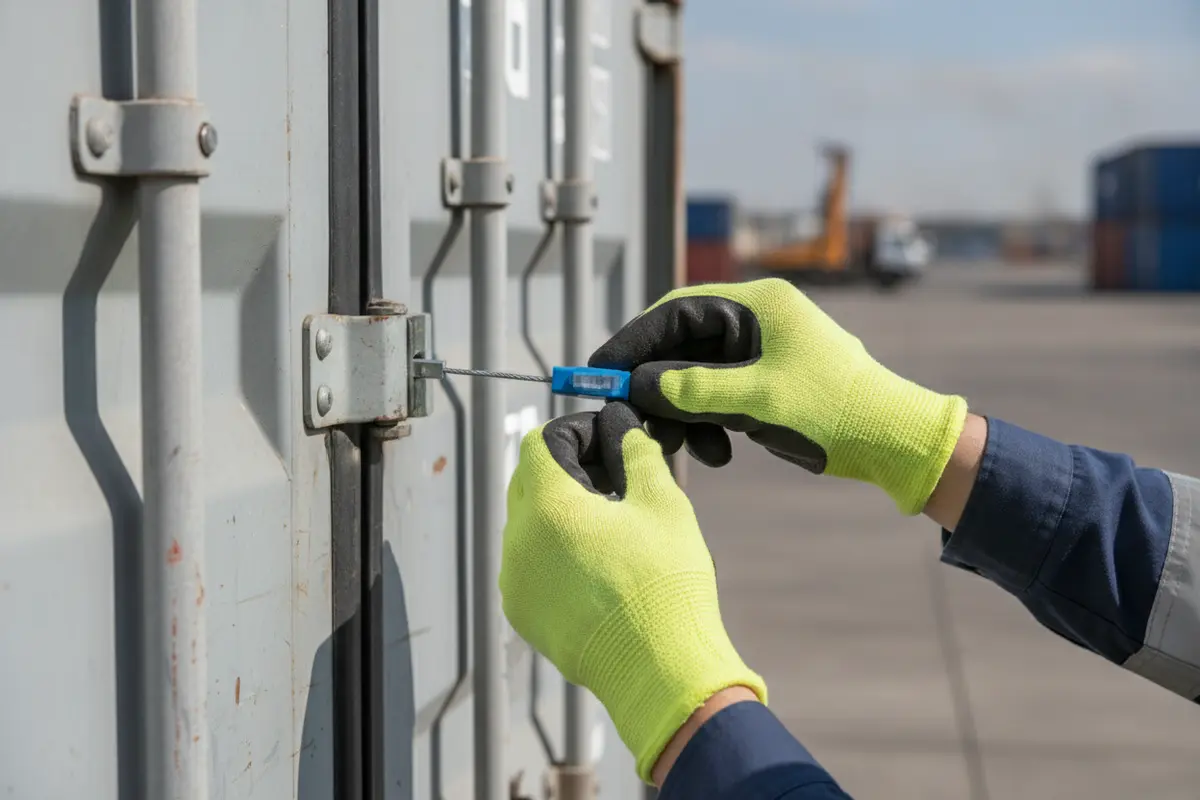
For example, a bolt seal may suit compatible container or trailer locking hardware when the buyer needs a stronger physical device and a controlled removal process. STiER's BS-30C RSS bolt seal product page is a product reference to assess against your use case. Verify model-specific details and applicable certifications directly in authoritative product documentation. Do not assume that a product belongs to a particular standard or class based only on its shape or a general category description.
Fit matters as much as the seal body. Check the door hasps or locking bars, the available opening, and whether the seal can be installed with no unintended slack or obstruction. Consider how staff will remove it at destination. If the process requires a cutter, identify the correct tool, where it will be stored, and who is authorized to use it. A difficult-to-remove seal can add friction to receiving operations if the required tool is not available.
Browse the security seal range to compare options by general product type, but make the final choice against the precise specification, use conditions, and documentation your organization needs.
How can buyers assess the access point before selecting a seal?
A short site-level review can prevent a sound seal choice from failing in day-to-day use. Begin at the actual closure, not at a product category page. Photograph the door, hasp, latch, or package opening from the angles staff will use during application and inspection. Note the opening size, obstructions, sharp edges, and whether the seal can be seen after the load is closed.
- Map the path: List every point where cargo can be accessed, including an outer container door and any separately controlled inner package. Decide whether each point needs evidence of opening, added resistance, or both.
- Check the operating conditions: Consider weather exposure, vibration, handling frequency, and the people who apply and inspect the device. Verify product suitability from its current specification rather than assuming a material or style will work in every environment.
- Test the routine: Have the staff member who will apply the seal demonstrate the process, then ask a receiving colleague to locate and read its identifier without coaching. A seal that is awkward to see or record can weaken the procedure even when it fits the hardware.
- Review exceptions: Agree what happens if the numbered seal is obscured, damaged, absent, or difficult to remove. A written stop-and-report path is more useful than asking each shift to improvise.
For instance, a high-security cargo door may call for a robust seal that fits its locking bars, while an inner document pouch may only need an easy-to-inspect indicative control. Treating those as separate decisions helps avoid using a more substantial device where it adds little value or an indicative device where the outer opening requires greater resistance.
How should teams compare removal methods?
Removal is part of security design, not an afterthought. The right method should make routine receiving practical while preserving accountability. A seal that can be removed casually may not provide the control a high-risk shipment needs; a seal requiring a specialized tool can cause delays if the tool is unavailable.
- Document the intended removal: Identify whether the device is cut, released, or removed using another specified method. Follow the product instructions rather than improvising.
- Assign responsibility: Define which role may remove the seal and where the removal is recorded.
- Plan for the tool: Where cutting is required, make the compatible cutter available at the receiving point. For operations using bolt seals, review suitable seal-removal tools and confirm compatibility before dispatch.
- Keep the evidence: Record the seal number before removal when safe and practical, note who removed it, and retain the device or a photo if your procedures require it.
- Train for exceptions: Staff should know how to stop, isolate the load, and report a seal that is missing, mismatched, damaged, or unexpectedly difficult to remove.
Never ask staff to force a seal or cut it before documenting a visible discrepancy unless an immediate safety need requires otherwise. Establish a clear exception procedure with operations and compliance teams, including who gets notified and how the shipment is held or released.
Before rolling out a new type, run a small operational trial at the origin and destination locations. Confirm that the seal can be applied in the time allowed, remains accessible for inspection, and can be removed with the approved tool. Ask staff to report practical issues such as poor visibility, awkward positioning, or uncertainty over who keeps the removed device. Resolve those details in the written procedure before adopting the seal across routes.
What compliance and certification details should buyers check?
Separate the seal's security function from the rule or standard that applies to your shipment. A device may be physically robust without satisfying a named certification requirement, while a certificate alone does not replace correct application, inspection, or records. If a contract or security program calls for a particular standard, verify the precise product model, certificate scope, and current documentation before ordering.
For international container movements, buyers may encounter ISO 17712 requirements for high-security seals. Do not assume that every bolt-shaped seal is certified, or that certification of one product extends to another. Confirm the seal is the version covered by the documentation, and make sure procurement retains the evidence for the audit or customer review.
Businesses participating in CTPAT or another supply-chain security program should check their current program procedures and shipment-specific requirements. STiER's guide to CTPAT seal requirements can help frame the questions to take to your compliance team. A blog article is not a substitute for current official program guidance or your organization's approved procedures.
When comparing suppliers, request current documentation for the exact item and ask what it establishes. Look for the applicable standard and edition, product identification, certificate scope, and any limitations. Keep the documentation connected to the purchasing record so staff can identify which approved seal was used for each shipment.
One practical check is to align three records before the purchase is approved: the requirement in the contract or security procedure, the product model named in the quotation, and the documentation that applies to that model. If any detail differs, ask for clarification in writing. A generic statement about a product family may not answer whether the particular configuration being ordered is covered. Assign someone in procurement or compliance to retain the approval and make it available to dispatch teams that need to order replacements.
How do serialization and seal logs improve control?
Both indicative and barrier seals are more useful when teams can connect each seal to a shipment and handoff. A visible number or other unique identifier gives dispatch and receiving teams a point of comparison. A mismatch does not automatically prove theft, but it is a discrepancy that should trigger the organization's review process.
A seal log can capture:
- Shipment, container, trailer, or other asset identifier.
- Seal type, model, and unique seal number.
- Who applied the seal and when, plus the origin location.
- Condition at application and, where appropriate, a photo.
- Each handoff inspection, including date, time, and receiving person.
- Seal condition and number at arrival, removal details, and any exception report.
Make the record usable for the people doing the work. A simple consistent process is more dependable than a long form that staff skip. For multiple locations, align the fields and exception steps so teams can compare records across sites. Ensure the seal number is transcribed accurately and legibly, and keep access to the log controlled according to company policy.
Build a comparison into the handoff, rather than relying on someone to remember the number from an earlier shift. The person receiving the load should compare the physical identifier with the dispatch record before removal. If the seal is intact but the number differs, record both the observed number and the expected number, note the time and location, and follow the organization's escalation procedure. If the seal cannot be read, document its condition and avoid replacing an uncertain record with a guess.
What should an RFQ include when comparing seals?
A specific request for quote helps the supplier recommend relevant options without guessing about your application. Describe where the seal will be applied, what it must accomplish, and how your staff will inspect and remove it. If you have a mandatory standard, give its exact name and edition and request documentation for each proposed model.
- Access point and compatible hardware, with a photo or measurements if useful.
- Cargo type, route conditions, and expected handling or inspection points.
- Whether the requirement is indicative evidence, physical resistance, or both.
- Required standard, certification, or customer specification and proof needed.
- Identifier format, serialization, color, barcode, or branding needs.
- Removal method, tools available at destination, and any staff constraints.
- Estimated quantities, order timing, and whether the need is recurring.
- Documentation, samples, or product records procurement must retain.
Compare each proposal against the same requirements. Ask suppliers to identify the exact model and explain any limits or assumptions. Pricing for customized or volume-based seal programs may depend on specification and quantity, so provide realistic usage estimates for a useful quotation. STiER supports quote requests through its contact page; include the application details above to make the discussion more productive.
For a useful side-by-side review, give each proposed seal the same application description and ask suppliers to respond in the same order: intended purpose, fit notes, removal method, identifier options, supporting documentation, and any assumptions. This makes gaps easier to spot than comparing brochures with different levels of detail. For example, if one proposal states a product name but does not address your required certification evidence, mark that point as unresolved rather than treating silence as confirmation.
Request help comparing seal options
What questions do buyers ask about indicative and barrier seals?
Is a barrier seal impossible to defeat?
No. "Barrier" describes a stronger physical-resistance purpose, not immunity to attack. A seal is one element of a cargo-security plan. Protect the surrounding hardware, control access, inspect at handoffs, and follow an exception process.
Can an indicative seal be serialized?
Serialization is a product-specific feature. Check the item specification and request the identifier format you need. Whatever format you use, record the seal number at application and compare it at receipt.
Does a bolt seal automatically meet ISO 17712?
No. Product shape does not establish certification. Verify the exact model and current supporting documentation against the requirement that applies to your shipment.
Can a shipment use both types of seals?
It can, if the security plan calls for different controls at different access points. For example, teams may use a high-security seal at a cargo door and an indicative seal on a separate internal bag. Define what each seal protects, who checks it, and how each identifier is recorded.
Talk through your cargo-seal requirements
How can you choose the right security level?
Match the seal to the actual risk and the access point. Use an indicative option when visible evidence and repeatable inspection are the priority; evaluate a barrier-style, documented high-security option when stronger physical resistance or a specified compliance requirement matters. Then confirm fit, removal, identifiers, records, and supporting documentation before standardizing the process. Contact STiER to review your application and specify a seal program that your team can apply and inspect consistently.
Contact STiER to review your seal requirements
A clear specification and consistent handoff checks help teams use the right seal for each shipment and respond appropriately when something does not match.