


A security seal is only as reliable as the process surrounding it. A missed number, rushed application, or untrained hand can weaken cargo protection long before a shipment reaches its destination. For logistics companies, the consequences can include disrupted operations, difficult investigations, customer claims, and compliance exposure.
Security seal mistakes logistics companies how to avoid starts with a documented process: use high-security seals that meet ISO 17712 for applicable CTPAT shipments. Record and verify each serialized seal at handoffs, train staff to apply and inspect seals correctly, and maintain controls that support continuity.
These controls work together. A compliant seal cannot compensate for poor records, and serialization has limited value if employees do not verify the seal number against shipping documents. The following guide breaks down the most common failures and practical ways to prevent them, beginning with the process controls that make a shipping container security seal effective in daily operations.
Request a customized safety seal quote for your logistics operation.
How Logistics Companies Avoid Costly Security Seal Mistakes
Security seal mistakes are avoidable operational and compliance errors that weaken cargo protection and shrink supply chain resilience. The seal itself is only one control. If access, handoffs, records, and staff practices are not secure, the seal can create a false sense of protection rather than meaningful evidence of tampering. This process-based view aligns with the CISA Supply Chain Risk Management Essentials, which emphasizes practical steps that improve organizational security resilience.
Use the overview below to identify where a small procurement or training shortcut can create a much larger exposure:
- Confirm the seal standard and intended cargo risk before ordering.
- Control who receives, stores, applies, verifies, and destroys seals.
- Record each seal number at the points where custody changes.
- Review the process regularly, not only after a loss or suspected breach.
| Mistake | Why It Hurts | The Fix |
|---|---|---|
| Non-Certified Seals on CTPAT Shipments | Creates a compliance gap and may leave international cargo exposed to theft or penalties. | Specify high-security seals that meet the required standard, then retain supporting documentation. |
| No Serialization or Records | Teams cannot prove which seal was applied, detect an unauthorized replacement, or trace a custody break. | Assign unique numbers, verify them against shipping documents, and log every handoff. |
| Buying on Price Without ISO Verification | A low unit price may hide unsuitable construction, weak controls, or unsupported certification claims. | Verify certification and supplier documentation before comparing total cost. |
| No Staff Training | Incorrect application or inspection can make a sound seal ineffective. | Train staff on application, tamper inspection, logging, and controlled removal. |
| Single-Sourcing | A disruption at one supplier can interrupt shipments or force rushed substitutions. | Qualify a backup source and audit procurement and distribution controls. |
High-security seals are a minimal investment with a potentially high return because they strengthen control and client confidence. But that return depends on the surrounding process. As the fact ledger notes, a seal is effective only when the logistical process is secure. Treat seals as one visible part of a broader supply chain risk management system. Then measure whether the people and records around them support the protection they are meant to provide.
Mistake 1: Why Do Non-Certified Seals Break CTPAT Compliance?
Why does seal certification matter for a CTPAT shipment?
CTPAT members are required to use high-security seals that meet or exceed the ISO 17712 standard. This requirement is not a purchasing preference. It establishes a recognized baseline for resistance to unauthorized removal, manipulation, and replacement on international cargo. A seal that is merely inexpensive, visually convincing, or labeled as tamper-evident may not satisfy the high-security requirement.
What happens when a logistics company uses a non-compliant seal?
Non-compliant, low-security seals can leave cargo exposed to theft while creating a separate compliance problem. If a shipment is compromised, the seal may not provide meaningful evidence that the container or trailer was protected. The resulting consequences can include cargo loss, investigation costs, customer disputes, and non-compliance penalties. Treating the seal as a minor supply item can therefore create a much larger operational and financial risk.
How should a company verify that its seals meet the CTPAT requirement?
Procurement teams should confirm that the product is classified as a high-security seal and that its certification documentation supports ISO 17712 compliance. Keep the product specification, supplier documentation, purchase records, and approved use cases together. A vendor that cannot clearly provide this evidence should not be used for CTPAT-controlled shipments. Review CTPAT compliance and record-keeping practices to strengthen this documentation trail.
What records must support the seal security process?
U.S. Customs and Border Protection states that seal security procedures should be documented and available for audit. Your procedure should identify the approved seal type, who controls inventory, when the seal is applied. How the number is recorded, and what staff must do if a seal is missing or appears compromised. See the CBP seal security procedures guidance and the ISO 17712 high-security seal standard when reviewing internal controls.
Using a certified high-security seal is the first control. Documenting how that seal is issued, applied, inspected, and reported is what makes the control auditable across the shipment lifecycle.
Mistake 2: What Happens When Seal Application and Serialization Records Are Missed?
A serialized seal is only useful when its number connects the physical shipment to a reliable record. Serialized seals support CTPAT traceability and help prevent unauthorized replacement, while non-serialized seals on high-value cargo provide no practical way to track individual assets. If a seal is missing, changed, or reported incorrectly, the investigation can lose its most important starting point.
Record the seal number when it is issued, applied, inspected, transferred, and removed. At every handoff, the responsible employee should compare the number on the seal with the shipping documents, then record the result in the company logistics system. This creates a clear chain of custody and makes an unexplained discrepancy visible before the shipment moves farther through the network. For a deeper process framework, see STiER's guide to seal serialization and audit trails.
What should the record-keeping process include?
- Issue control: Record each seal number when it enters inventory and identify who has access to unused seals.
- Application details: Capture the exact seal number, shipment or container identifier, location, date, and employee responsible for application.
- Handoff verification: Compare the seal number against shipping documents at every transfer point, including carrier, warehouse, and border handoffs.
- Software accuracy: Enter seal numbers carefully in the logistics system. A transposed digit can make a valid seal appear missing or create a false chain of custody.
- Inspection results: Note whether the seal is intact and document any mismatch, damage, or sign of manipulation before releasing the shipment.
- Removal and disposal: Record when the seal is removed and dispose of it according to policy. Never reuse a seal. Reuse can void security warranties and invite tampering.
These controls do not require a complicated system. A structured digital workflow can reduce manual errors, but the standard must remain consistent across facilities and subcontractors. Employees should know who owns each entry and what action to take when a number does not match. STiER's overview of CTPAT record-keeping provides additional guidance for documenting procedures and vendor records.
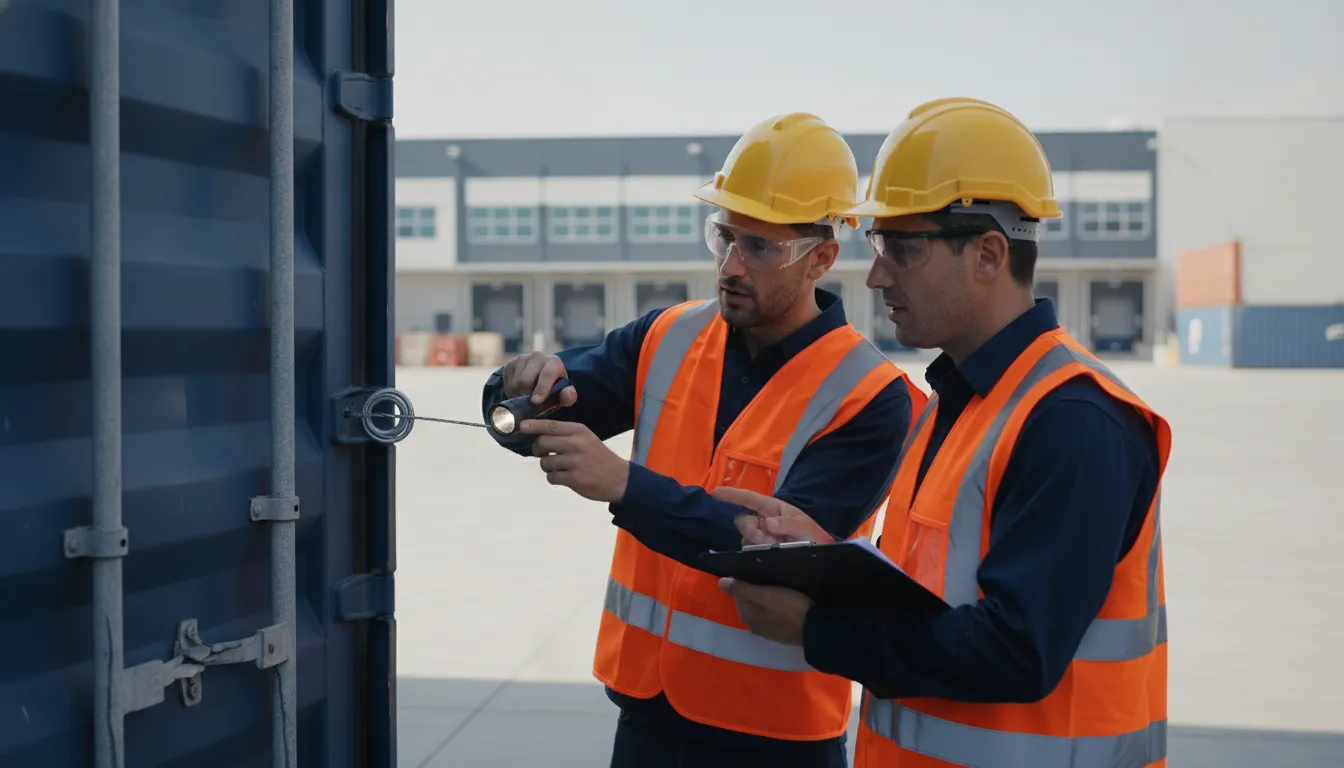
Mistake 3: Why Does Buying on Price Alone Undermine ISO Certification?
Why can the lowest quote create a higher logistics cost?
A low unit price may hide weak materials, inconsistent production controls, incomplete documentation, or a supplier that cannot verify certification. High-security seals are a control point in the cargo process, not a disposable item to evaluate by price alone. Non-compliant, low-security seals can leave international cargo exposed to theft and create compliance penalties. In 2024, cargo theft losses reached an estimated $1.2 billion globally, according to TAPA.
What should procurement verify before comparing offers?
Start by confirming which products meet ISO 17712 requirements for the intended application, and ask the supplier to provide current, product-specific documentation. Also evaluate the supplier's quality management practices, serialization controls, manufacturing consistency, and ability to support your shipping volume. CTPAT members are required to use high-security seals that meet or exceed ISO 17712, so a vague statement that a product is "security rated" is not enough. Use this ISO 17712 buyer checklist to organize the review.
How does supplier quality affect authenticity?
A certified, reputable supplier helps establish that the seals delivered are authentic and match the specifications approved during procurement. This relationship also gives your team a responsible point of contact when documentation, customization, or a production question arises. The goal is not to pay the highest price. It is to verify that the product, records, and supply process justify the cost of protecting the cargo.
What equipment should be included in the buying decision?
Removal procedures matter too. Authorized teams should use specialized cutters for high-security bolt seals, reducing the chance of cargo damage or an unsafe removal. Include the right cutter and handling guidance in the operating plan rather than treating them as afterthoughts.
How should logistics teams compare quote-based seal products?
STiER security seals are quote-based and volume-sensitive. Request a quote that identifies the seal type, quantity, serialization requirements, documentation, and any customization. Comparing complete, verified specifications is more useful than choosing the lowest unqualified number.
Get a quote with verified certifications and serialization requirements
Mistake 4: Not Training Staff on Correct Seal Application and Inspection
A certified high-security seal cannot compensate for a weak application and inspection process. If employees do not know how to fit the seal, recognize tampering, record its number. Or remove it safely, the seal may provide only a false sense of security. Training should apply to warehouse teams, drivers, supervisors, and relevant subcontractors who handle cargo or seal inventory.
Make the training practical and role-specific. Demonstrate the exact seal types used at each facility, then have employees perform the process under supervision. Staff must also understand the difference between a high-security seal and an indicative seal. An indicative seal can show evidence of interference, but it does not provide the same level of resistance or compliance value as a high-security seal.
What should seal-handling training include?
- Application: Teach employees to apply the seal as the last step before a container or vehicle leaves the secure loading area. The person applying it should confirm that the doors or access point are fully secured and that the seal is difficult to reach or manipulate without visible evidence.
- Inspection: Show staff how to check for cuts, distortion, mismatched components, altered numbers, or other signs of tampering. Require inspection at the appropriate handoff points and before unloading.
- Logging: Require accurate recording of the seal number, shipment reference, date, location, and responsible employee in the approved paper or digital system. A missing or incorrect number breaks the audit trail.
- Removal: Provide the correct specialized cutter or other approved tool for the seal type. Improvised removal can injure employees, damage cargo, or leave the process uncontrolled. Removal should occur only at an authorized destination and should be documented.
Q: When should a seal be applied?
A: Apply it immediately before departure, after loading and final checks are complete. Applying it earlier creates more opportunities for unauthorized access or accidental damage before the shipment leaves the secure area.
Refresh training when procedures, seal types, software, or personnel change. Short demonstrations and periodic mock-tampering exercises can expose gaps before they affect a real shipment.
Mistake 5: Single-Sourcing Without a Backup Supplier for Continuity
Why does relying on one security seal supplier create a continuity risk?
A single supplier may be dependable until a production delay, transportation disruption, inventory shortage, certification issue, or sudden demand increase affects availability. If your operation cannot secure approved replacement seals, teams may delay shipments, use unsuitable products, or weaken established inspection and documentation controls. That creates both an operational gap and a security exposure. A continuity plan should identify an alternate source before an emergency, not while a container is waiting to depart.
What should logistics companies require from a primary and backup supplier?
Both suppliers should be certified, reputable, and able to provide the seal types, security features, serialization, and documentation your procedures require. Supplier substitution is not simply a purchasing decision. Confirm that the alternate source can meet the applicable specifications and support your audit trail. A certified supplier relationship helps protect the authenticity and quality of high-security seals. Which is why supplier qualification belongs in the security program, not only in the procurement file.
Before an interruption occurs, document product equivalencies, approval contacts, lead times, minimum order requirements, and the process for validating a new seal series. For a broader product-selection framework, review this security seal buying guide.
How should stored seals be protected while the backup plan is inactive?
Keep high-security seals in a secure, climate-controlled environment to reduce premature degradation and prevent unauthorized access. Restrict warehouse access to authorized personnel, and maintain controlled records for receipt, issuance, and remaining inventory. A backup supplier does not compensate for weak internal controls. If someone can remove or substitute unused seals without detection, continuity planning can expand the attack surface instead of reducing it.

How often should the continuity process be tested?
Conduct regular audits of procurement and distribution processes. Check supplier certifications, inventory counts, access records, seal-number controls, and the practical ability to place an approved order with the alternate source. Resolve discrepancies before they affect a shipment. When a supplier change becomes necessary, use a documented transition plan for validation, inventory control, staff communication, and record updates. This guide explains switching seal suppliers without disruption in more detail.
Request a security seal assessment and quote for your program
Frequently Asked Questions
What are the most common security seal mistakes in logistics?
Common mistakes include choosing the wrong seal for the shipment, applying it incorrectly, failing to verify the serial number at handoffs, and keeping incomplete records. Logistics teams should match the seal to the threat level, apply it as the final step before departure, inspect it at transfer points, and record each number accurately.
How can logistics companies support CTPAT compliance with security seals?
CTPAT members must use high-security seals that meet or exceed ISO 17712 requirements. They should also document seal selection, storage, application, inspection, removal, and incident-response procedures so those controls can be reviewed during an audit. See the ISO 17712 standard and seal security procedures.
Why is serialization important for supply chain security?
Serialization gives every seal a unique identifier that supports chain-of-custody tracking. Teams can compare the number on the seal with shipping documents at each handoff, detect unauthorized replacement, and create a reliable audit trail. Do not reuse seals, even when they appear intact.
What should security seal training cover?
Training should show employees how to distinguish high-security and indicative seals, apply each type correctly, inspect for tampering, log serial numbers, and use approved removal tools. Managers should verify that staff follow the same process at every facility and know how to isolate and report a shipment when a seal is damaged or does not match its records.
Get started with a stronger seal program
A documented, certified, serialized seal program can help your logistics team support compliance and maintain clearer control across handoffs. To review your requirements and request a quote for security seals suited to your supply chain, contact us through STiER's contact page.