


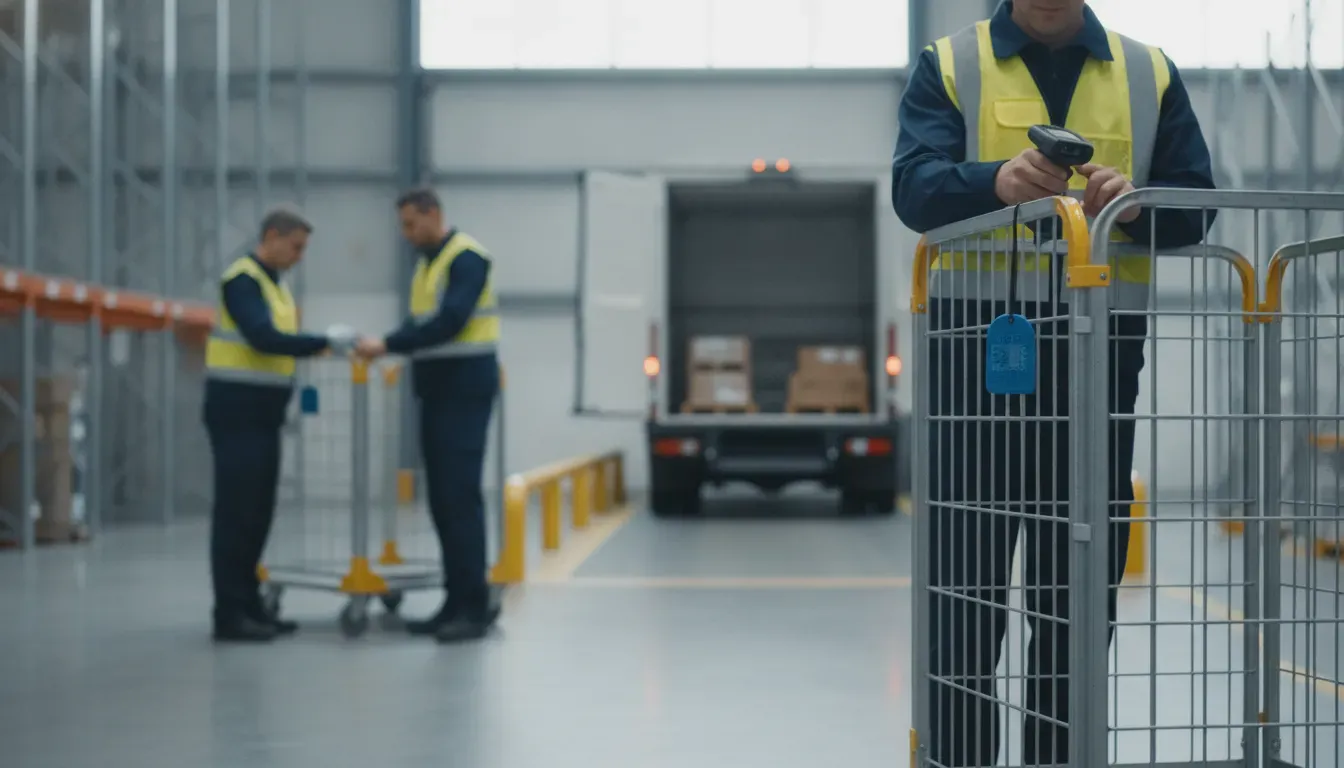
E-commerce fulfillment changes the cargo security problem. A shipment may move from a supplier to a fulfillment center, through a sortation area, into a trailer, across several handoffs, and finally into a last-mile delivery route. The cargo security e-commerce fulfillment seal lock last mile distribution question is therefore not solved by one device. It requires controls that match each closure, risk point, and documented handoff.
For logistics teams, compliance officers, and procurement managers, the practical goal is simple: deter unauthorized access, make tampering visible, and give the operation a reliable record when a seal is applied, checked, replaced, or removed. This guide explains how to combine serialized security seals, cargo locks, controlled procedures, and order-system records without treating a seal as a substitute for the entire security program.
Request a customized cargo security quote for your fulfillment network.
How Does Cargo Security Differ in E-Commerce Fulfillment and Ocean Freight?
Answer: Ocean freight often centers on one primary container closure and a small number of documented custody events. E-commerce fulfillment adds distribution-center doors, rolling cages, totes, trailer transfers, returns, and more frequent handling. The security program must assign the right seal or lock to each physical control instead of applying a container-only standard everywhere.
An ocean container may remain closed for a long movement between origin and destination. In contrast, an e-commerce order can be consolidated, split, staged, loaded, unloaded, and routed again in a short period. Every extra touchpoint creates an opportunity for an incorrect seal number, an unrecorded replacement, or an unlocked staging area.
That does not mean every parcel needs an ISO 17712 high-security seal. It means the operator should map the movement first. Identify the assets being protected, who can access them, which closures can accept a seal, and where a team member must prove that the load remained intact. A trailer carrying consolidated high-value orders has a different exposure from a rolling cage moving between two secured zones inside one facility.
- Primary conveyance: Protect trailer, container, or box-truck doors with a suitable lock and serialized seal.
- Fulfillment-center staging: Secure cages, cabinets, gates, and restricted areas with reusable locks where deterrence matters.
- Order consolidation: Use indicative seals where a tote, bag, or cage needs visible evidence of access.
- Returns and exceptions: Record every opened, inspected, or resealed shipment as an event, not as an informal note.
STiER's supply chain compliance guide provides the broader framework for connecting physical controls, trade requirements, and auditable records. This article narrows that framework to the higher-touch fulfillment and last-mile environment.
Which Seals and Locks Fit Distribution Centers and Last-Mile Routes?
Answer: Match the control to the closure and the consequence of unauthorized access. High-security bolt seals are suited to applicable container and trailer doors. Cable seals can fit adjustable or irregular latch points. Indicative plastic seals can show access on bags, carts, totes, and other lower-risk points. Reusable container, trailer, discus, and padlocks add physical deterrence where a team needs to prevent casual or forced entry.
Security seals and locks do different jobs. A serialized seal creates visible tamper evidence and a number that can be checked against a shipment record. A lock creates a reusable physical barrier that can make forced access slower and more conspicuous. For higher-risk outbound loads, using both can provide layered protection, provided the team knows which device it must inspect and which key or seal number belongs in the record.
| Fulfillment security point | Typical control | What the team should verify |
|---|---|---|
| Container or trailer door | ISO 17712 high-security bolt seal plus a suitable cargo lock when risk warrants | Seal number, placement, door condition, lock engagement, and shipment record |
| Irregular latch or adjustable closure | Serialized cable seal matched to the hardware | Cable routing, locking body, serial number, and signs of cutting or manipulation |
| Rolling cage, tote, bag, or cabinet | Indicative plastic seal or reusable padlock, based on risk | Closure condition, seal identity, authorized access, and exception status |
| Yard, gate, or trailer kingpin | Weather-resistant container, trailer, discus, or kingpin lock | Correct key control, lock engagement, physical damage, and access authorization |
STiER carries bolt seals, cable seals, indicative plastic seals, and DoubleLock hardware for these different applications. The OX, BULL, and RHINO container-lock tiers can help teams compare portability and duty level, but the model decision should follow the door hardware, environment, route exposure, and asset value. A product name alone is not a security plan.
For a closer explanation of the two-control approach, see STiER's container lock versus security seal guide. The key distinction is that the lock deters entry while the serialized seal documents whether the closure changed.
When Does Last-Mile Fulfillment Require ISO 17712 High-Security Seals?
Answer: ISO 17712 is relevant to mechanical freight container seals used in international commerce, not automatically to every parcel, tote, or domestic delivery. A fulfillment operation should use an ISO 17712 high-security seal when the applicable lane, customer requirement, CTPAT procedure, or container security policy calls for that classification. Smaller internal closures may need a different indicative control.
The ISO 17712:2013 standard establishes uniform procedures for classifying, accepting, and withdrawing mechanical freight container seals. It is a product standard, not a complete supply-chain operating procedure. The operation still needs to control issuance, verify the seal at the right point, train staff, and document exceptions.
For CTPAT-aligned operations, the U.S. Customs and Border Protection seal security procedures guidance describes controls such as maintaining seal documentation, logging inventory, securing unused seals, checking the seal number and condition, and reporting compromised seals. CBP's supporting seal procedures and best practices document also describes the View, Verify, Twist, and Tug check for applicable high-security closures.
Use those sources as program references, then confirm the exact requirement for the lane and customer. A domestic last-mile van carrying ordinary parcels may need controlled access and an indicative seal rather than a high-security container seal. An international trailer leaving a fulfillment center may need an ISO 17712 high-security seal, documented serial number, and a trained inspection process. Procurement should retain the product documentation that supports the selected classification.
How Can Multiple Fulfillment Centers Standardize Seal Procedures?
Answer: Standardize the decision rules and the records, not just the product SKU. Every site should use the same definitions for issue, apply, inspect, replace, remove, mismatch, compromise, and escalation. A shared procedure makes local teams faster while giving compliance and procurement one way to compare performance across the network.
- Define the control matrix. Map each asset type to the approved seal or lock, the required security level, the owner, and the inspection point.
- Control unused inventory. Store serialized seals in a restricted area, assign them to authorized staff, and reconcile issued, used, damaged, and remaining numbers.
- Use a consistent application check. Confirm the correct number, placement, closure condition, and physical integrity before dispatch. For applicable high-security container seals, train staff on the required inspection method.
- Record every replacement. If a seal is cut for inspection, damaged, or replaced, record the original number, replacement number, reason, time, location, and approving person.
- Set the exception path. A mismatch or suspected compromise should pause normal release, preserve evidence where practical, notify the responsible team, and follow the company's customer and authority notification policy.
- Audit the process. Compare physical inventory, shipment records, scan events, and exception reports on a defined schedule. Train new staff and refresh the procedure when hardware or systems change.
Standardization also protects procurement decisions. If one center uses a bolt seal, another uses a cable seal, and a third uses an unnumbered closure without documenting why, the network cannot compare exceptions or demonstrate consistent control. Approved alternatives are useful, but each alternative should have a stated use case and a record of who authorized it.
How Should Teams Connect Seal Tracking to Order Management Systems?
Answer: Treat the serialized seal number as a join key between the physical load and the digital order, shipment, trailer, or container record. Capture a small set of events at defined points, such as applied, inspected, transferred, replaced, and removed. This creates a useful chain-of-custody record without pretending that a mechanical seal provides live location data.
A practical data record can include:
- Order, shipment, trailer, container, cage, or load identifier.
- Seal serial number, seal type, and control status.
- Event type, timestamp, facility, route point, and responsible user.
- Inspection result and exception reason for a missing, damaged, or mismatched seal.
- Replacement seal number and approval reference when the original is removed.
Barcodes, QR codes, or other approved markings can reduce manual transcription. The integration does not need to be complex to be useful. The essential controls are a unique identifier, a defined scan or entry point, permissioned users, and an exception workflow that people will actually follow. A clean record is not proof that a seal stayed intact between scans, so the physical inspection remains part of the process.
STiER's seal tracking and supply-chain visibility guide explains how serialized seals can connect physical events with TMS, WMS, and ERP records. Keep the boundary clear: the seal identifies a control event; a separate telematics or tracking system is needed for continuous location visibility.
What Should a Last-Mile Cargo Security Program Measure?
Answer: Measure whether the control is applied, recorded, inspected, and resolved consistently. Useful indicators include seal-accounting accuracy, scan completeness, mismatch rate, replacement reasons, exception response time, training completion, and lock or seal inventory variance. These measures reveal process failures before a security incident becomes a customer or compliance crisis.
Start with a small dashboard that operations can act on:
- Seal-accounting rate: Were issued serial numbers accounted for as used, returned, damaged, or destroyed?
- Event completeness: Do outbound and inbound records contain the required application and inspection events?
- Mismatch and compromise rate: How often did the number, placement, or condition fail inspection?
- Replacement quality: Were original and replacement numbers linked with a reason and approval?
- Response time: How long did it take to contain and investigate an exception?
- Training coverage: Are employees and contracted partners current on the procedure?
Review the results by facility, carrier, route, and handoff type. A high mismatch rate at one dock may indicate a training or scan issue. A concentration of replacement events on one route may justify a carrier review, a different closure, or stronger lock hardware. The point is to turn seal data into decisions, not to collect numbers that nobody uses.
Frequently Asked Questions
Do e-commerce fulfillment centers need high-security seals on every package?
No. High-security seals are designed for applicable mechanical freight container and trailer security requirements. Packages, totes, bags, cages, and internal doors may need indicative seals, locks, controlled access, or another documented control based on the asset, route, and risk.
Can a cargo lock replace a serialized security seal?
Usually not when the operation must prove a chain-of-custody event. A lock provides reusable physical deterrence, while a serialized seal provides visible tamper evidence and an identifier for the shipment record. Higher-risk loads may benefit from both.
What should happen when a last-mile seal number does not match?
Pause normal release, preserve the relevant information, notify the responsible security or compliance owner, and follow the company's documented exception procedure. Record the original and replacement seal numbers if a replacement is authorized. The exact notification path depends on the shipment, customer, lane, and applicable authority requirements.
Can serialized seals integrate with an order management system?
Yes. The serial number can serve as a join key between a seal event and an order, shipment, trailer, container, or cage record. Capture defined events such as applied, inspected, transferred, replaced, and removed. Do not treat the seal itself as a live location tracker.
Ready to Strengthen Fulfillment Cargo Security?
The best last-mile program combines the right physical control with a procedure that staff can execute and a record that compliance teams can review. STiER helps businesses evaluate serialized seals, bolt and cable seals, indicative seals, container and trailer locks, and related hardware for logistics and supply-chain applications.
Contact STiER for a practical seal and lock recommendation for your fulfillment network.