


A semi-trailer seal has to do more than close a latch. It must fit the hardware without forcing the door. It must provide the required security classification. It should also leave a record that operations and compliance teams can verify later. Selection should begin with the trailer's actual latch configuration, not a generic product label.
High security bolt seals for semi-trailers suit commercial cargo when the rigid bolt fits the trailer latch. Meets applicable ISO 17712 high-security requirements, carries controlled serial numbers, and fits the shipper's inspection and recordkeeping process. They add tamper evidence, but they do not replace broader cargo-security controls.
CBP identifies enclosed trailers that can accept a seal as containerized cargo, and its sealing policy references ISO/PAS 17712-compliant high-security bolt seals for covered inspections: CBP sealing policy. The practical decision is therefore a combination of fit, documentation, and workflow. Documenting serialized cargo seals becomes much easier when those requirements are defined before ordering.
Request a quote for your trailer seal requirements.
What Makes a Bolt Seal Suitable for a Semi-Trailer?
A suitable bolt seal begins with the trailer's closure, not with a generic security label. A semi-trailer needs a seal that can be affixed through compatible locking points across its closed doors. It should remain visibly intact during transport. Confirm the fit against the trailer and latch configuration before ordering. If the bolt cannot pass cleanly through the closure points, its security function and inspection value are weakened. The same is true if the seal does not seat securely.
Semi-trailers fall within the scope of containerized cargo controls when they are enclosed and capable of having a seal affixed. U.S. Customs and Border Protection identifies trailers as land-arriving cargo equipment and states that its officers may apply an ISO/PAS 17712-compliant high-security bolt seal after a covered inspection. CBP's sealing policy provides the relevant operational context.
What does high-security classification add?
High-security classification establishes a more specific selection standard than simply choosing a device that closes a door. CBP recommends seals compliant with ISO 17712 standards for high-security seals. Buyers should therefore verify the applicable compliance documentation and retain it for review, rather than relying only on product terminology or a supplier's general description.
A bolt seal is also intended to make unauthorized access evident. Removal is normally a controlled event requiring an appropriate process. Depending on the product and application, a dedicated removal tool may be required. A carrier adding another seal must not remove, replace, or manipulate a CBP-installed high-security bolt seal. The practical question is not whether a seal makes a trailer impossible to open. The question is whether an intact, altered, or missing seal can be identified and investigated.
How does serial control support the seal?
Each seal should be tied to a record, not treated as anonymous hardware. CBP's policy describes a unique alphanumeric serial number. It also describes notification of the relevant seal number before an inspected container reaches its receiving facility. Depending on the circumstances, that information may be communicated through transportation documents, a bill of lading, or another agreed method. A carrier, broker, importer, or receiving team can then compare the expected number with the seal on arrival.
For a practical product reference, review the ISO 17712-compliant bolt seal specifications and confirm the closure fit, documentation, serial-control process, and removal procedure with the supplier. The seal is one control within a broader cargo-security program. It supports detection and accountability, while secure storage, trained application, inspection, records, and wider supply-chain controls address the risks a seal alone cannot eliminate.
Which Specifications Should Buyers Verify for High Security Bolt Seals for Semi-Trailers?
For a semi-trailer, evaluate a high-security bolt seal against the door-latch configuration, security classification, and procedures your team can support. STiER's BS-30C RSS is described for container and trailer door latches, with tool-required removal. The published specifications help procurement, but the seal still needs to fit the hardware and workflow at each facility.
Start with the physical interface. Confirm the pin diameter and shaft length against the latch openings, then review the construction and stated tensile strength. These details help buyers compare a product specification with the conditions of their trailer fleet without assuming that one seal fits every closure.
| Specification | Published detail | Buyer verification |
|---|---|---|
| Application. | Container and trailer door latches. | Confirm compatibility with the semi-trailer latch. |
| Construction. | Galvanized low-carbon steel wrapped with ABS. | Confirm the supplied construction matches your specification requirements. |
| Tensile strength. | 1,300 kg stated. | Review the product documentation for your order. |
| Pin and shaft. | 8 mm steel pin and 87 mm shaft. | Measure the latch openings and required reach. |
| Removal. | Removal by tool. | Confirm authorized staff have the correct removal process. |
| Identification. | Removable barcode security sticker; numbering up to nine digits. | Match serial control and document-record needs. |
Identification is more than a printing preference. The BS-30C RSS can be customized with numbering up to nine digits, along with logo, text, or barcode printing. Its removable security sticker includes a barcode that can be attached to transport documents. Before ordering, decide whether your receiving, dispatch, or compliance team needs a sequential number range, a barcode, or additional printed information. The selected format should support the records your operation actually maintains.
Color can also matter for identification at a loading dock or distribution point. STiER lists seven color options for the product. Confirm the available color selection and the exact customization requirements when requesting a quote rather than assuming every combination is stocked or available for every order quantity.
Finally, separate product specifications from program requirements. STiER lists the BS-30C RSS for trailer doors, ISO container doors, and international freight. Review the current documentation and applicable requirements for your operation before approval. You can also review STiER's trailer and cargo security applications to place the seal within its intended use cases.
How Do ISO 17712 and CTPAT Shape Trailer Seal Selection?
ISO 17712 and CTPAT address different parts of trailer security. ISO 17712 establishes the high-security seal classification and technical requirements that a product must meet. CTPAT is a broader supply-chain security process. It connects seal selection with written procedures, trained employees, controlled inventory, inspections, and auditable records. Treating one as a substitute for the other can leave a gap between buying a compliant seal and managing it correctly.
For semi-trailers, confirm that the seal suits the door-latch configuration. Also confirm that the supplier can provide current compliance documentation. CBP recommends high-security seals that comply with ISO 17712. Keep documentation of the standard on file for verification. Requirements can depend on the shipment, lane, customer, and program guidance. Verify current requirements with the responsible compliance team and official CBP materials.
That distinction matters when evaluating CTPAT cargo seal procedures. A product can have a unique serial number and still be poorly controlled if employees cannot show who received it. When it was applied, or whether the number matched the shipping record.
What should a trailer seal control process include?
CBP recommends conducting an inventory when seals arrive and recording them in a seal log. Seals should be assigned to a designated employee or department and stored in a secured container. When a seal is issued, the log should capture its usage information. These controls establish custody from the supplier's batch to the loaded trailer and help identify unexplained gaps during an internal review.
Training and verification are equally important. CBP recommends that a trained, designated person affix the seal to the loaded trailer, with another person witnessing the application. The View, Verify, Twist, and Tug method checks that the seal number is correct, the seal is not compromised, and it is properly affixed. Your written procedure should also define how employees record inspections, handle a discrepancy, and escalate a suspected compromised seal.
What documentation should buyers request?
Ask for the certificate or other documentation showing the applicable ISO 17712 compliance standard. Request batch or lot identification when available. Keep those records with the supplier and product information in your procurement file. Confirm that serial ranges, barcode or marking requirements, and customization will support your seal log and transport documents. A supplier that can explain certificate availability, batch traceability, and inspection support can better support an audit than one that provides only a product photograph.
Request a quote and discuss your trailer seal documentation requirements with STiER.
When Should a Fleet Compare Bolt and Cable Seals?
The choice between a bolt seal and a cable seal should follow the trailer closure, security classification, and the way your team applies, records, inspects, and removes seals. A rigid bolt seal can suit a semi-trailer latch designed to accept a pin-and-body closure. While a cable seal may provide more flexibility when the available openings do not align cleanly. Neither format is universally better. The right choice supports a documented cargo-security process.
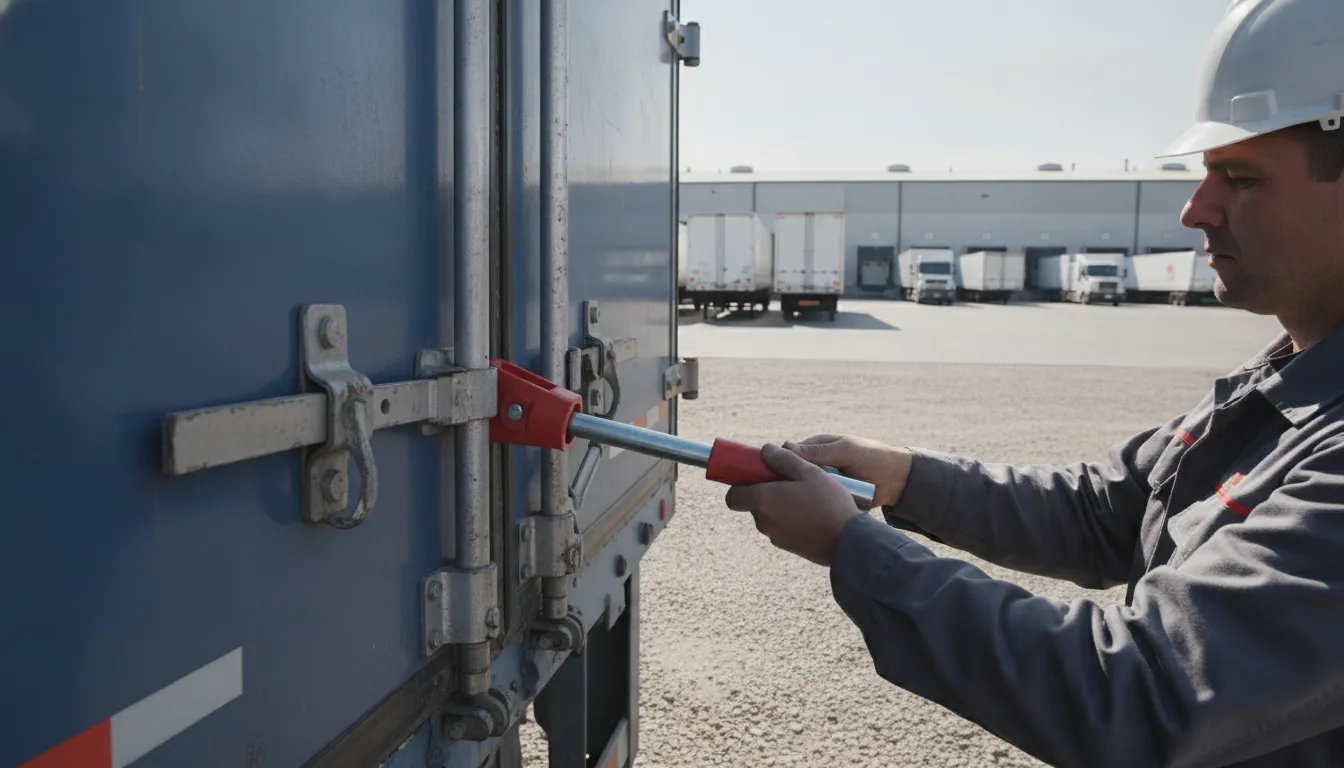
Start with the latch fit. STiER describes its BS-30C RSS as a high-security bolt seal for container and trailer door latches. Its steel pin passes through compatible latch openings, creating a defined closure that is straightforward to check during dispatch and receiving. Cable seals are more adaptable where a flexible cable can pass through offset, irregular, or multiple locking points. That flexibility can be useful across mixed equipment, but the cable length, diameter, and attachment path still need to be confirmed before ordering.
When does a rigid bolt closure make sense?
Consider a bolt seal when the fleet uses compatible trailer or container door hardware and wants a consistent, visible closure format. The BS-30C RSS is listed with an 8 mm steel pin and an 87 mm shaft, and STiER states that it is removed with a tool. Those details matter operationally: the latch must accept the shaft, and the receiving team should have a defined removal method rather than improvising at the dock. The product is also described as galvanized low-carbon steel wrapped with ABS, with a stated tensile strength of 1,300 kg. These are published specifications for that product, not a guarantee that every trailer configuration will perform identically.
When can a cable seal be the more practical option?
A cable seal deserves comparison when application points vary or when the team needs to route the seal through a configuration that does not suit a rigid pin. Cable flexibility can simplify fit across different doors and locking arrangements, but it does not remove the need for inspection, serial control, and controlled removal. STiER lists both high-security bolt seals and cable seals for ISO container doors and international freight, so the application should determine the format rather than a blanket preference. Compare cargo seal types before standardizing across a mixed fleet.
In either case, the seal is one layer in a broader control system. Record the assigned serial number, inspect the seal and its attachment, and define what staff should do when a seal is missing, altered, or compromised. CBP guidance says compromised seals or containers must be reported to CBP or the appropriate foreign authority. A sound selection therefore balances physical fit with the fleet's training, documentation, exception handling, and receiving workflow.
What Should a Buyer Include in a Bolt Seal Quote Request?
A precise request helps a supplier match the seal to the trailer, security process, and procurement plan. Include the following details so the response addresses your operation rather than sending a generic product description.
- Describe the trailer and latch. State whether the seals will be used on semi-trailer doors, container doors, or both. Include the latch style, available clearance, and any fit concerns. STiER describes its BS-30C RSS as a high-security bolt seal for container and trailer door latches, with an 8 mm steel pin and an 87 mm shaft. If you are replacing an existing seal, include its dimensions or a clear specification sheet.
- Identify the required security class. Say whether your program requires a high-security seal and whether ISO 17712 documentation is needed. Do not treat a product label as a complete compliance decision. Your carrier, importer, customer, or CTPAT procedures may require specific records and controls, so ask which certificates and test documents are available for the proposed product.
- Explain your serial-number process. Specify whether you need sequential numbering, a defined number range, barcode identification, or a removable label for transport documents. STiER lists numbering up to nine digits and can print a logo, text, or barcode. Explain who will issue seals, record them, and verify the number at loading and receipt.
- State the quantity and ordering pattern. Provide the initial quantity, expected recurring volume, delivery locations, and desired timing. Volume and replenishment needs can affect the appropriate quote structure and production planning, even when the product specification remains unchanged.
- List customization and documentation needs. Include colors, company identification, barcode format, packaging preferences, batch traceability, certificates, and any internal approval forms. Ask for the documentation your compliance or quality team must retain, rather than assuming every record is included automatically.
- Confirm removal and response requirements. Note who will remove the seals and what tools are available. The BS-30C RSS is listed as requiring tool removal. Also state where the supplier should send the response and whether you need samples or technical clarification before approval. STiER invites buyers to submit questions and says it will prepare a tailor-made offer, with a reply within 24 hours.
Request a quote with your trailer details, quantity, serialization plan, customization, and documentation requirements.
That information gives the supplier a workable specification and gives your team a clearer basis for reviewing the response. The next step is to address common questions about selection, handling, and the role of high-security seals in a broader cargo-control process.
Frequently Asked Questions About High Security Bolt Seals for Semi-Trailers?
What type of seal fits a semi-trailer door?
A rigid bolt seal is designed for compatible container and trailer door latches. Confirm the latch opening, clearance, and shaft requirements before ordering. For example, STiER lists the BS-30C RSS with an 8 mm steel pin and an 87 mm shaft, but those dimensions should be checked against your trailer hardware.
Do high security bolt seals prevent cargo theft?
No seal can prevent every theft or replace a complete cargo-security program. A high-security bolt seal adds a visible barrier and tamper evidence at the trailer closure. Access controls, inspections, driver procedures, route risk management, and incident response remain important supporting measures.
What does ISO 17712 mean for a trailer seal?
ISO 17712 identifies the high-security seal standard referenced in CBP guidance. Buyers should request compliance documentation and keep it available for verification. A product described as high security should not be treated as automatically compliant without reviewing the applicable documentation.
Why do bolt seals need unique serial numbers?
A unique serial number lets a team match the physical seal to its shipment records and verify the number during application and receipt. CBP recommends inventorying seals, maintaining a seal log, and using its View, Verify, Twist, and Tug method to check the number, condition, and application. CBP seal procedures
What information should I include in a bolt seal quote request?
Include your trailer or latch type, required security standard, quantity, serial-number format, color, barcode or logo needs, delivery location, and documentation requirements. Sharing these details helps the supplier confirm fit and prepare a tailored, volume-sensitive offer. STiER accepts inquiries through its contact page.
Are You Ready to Confirm the Right Trailer Seal?
The right high security bolt seal for a semi-trailer should match the trailer latch, support controlled serialization, and fit your operating volume. A clear quote discussion can also help you identify customization needs and organize the compliance documentation your team requires. Share your trailer or latch details, expected quantities, marking or serialization requirements, and documentation questions so the product conversation stays focused on practical fit and deployment. To discuss your requirements or request a quote, contact the STiER team.