

Choosing an ISO 17712 certified security seals manufacturer is not just a matter of finding a seal that fits a door. Importers, logistics operators, and compliance teams need to confirm that the product, its documentation, its identifiers, and their own seal-control process work together. A structured review helps you distinguish a verifiable high-security seal program from a supplier claim that is difficult to use during an audit or shipment investigation.
Discuss your seal requirements with STiER
What does ISO 17712 tell buyers about a security seal?
ISO 17712 addresses mechanical freight container seals. The U.S. Customs and Border Protection bulletin describes the standard as establishing uniform procedures for classification, acceptance, and withdrawal of those seals. That scope makes the standard a useful reference when buyers evaluate seals intended for freight containers, but the standard name alone does not answer every procurement question.
Ask what specific product is covered by the evidence, what classification is being represented, and whether the documentation can be matched to the seal model and the order you are placing. A brand may sell several seal types with different designs and uses. Do not assume that documentation for one model applies to every seal in a catalog.
For context, the CBP bulletin on ISO 17712 high-security seals summarizes the standard's role in classifying, accepting, and withdrawing mechanical freight container seals. Treat it as a starting point for understanding the standard, then ask the manufacturer for product-specific supporting documents relevant to your purchase.
ISO 17712 is not a substitute for your entire cargo-security program. It does not tell a buyer which seal to use on every package, trailer, tank, or facility gate, nor does the label alone establish how a seal was issued, applied, inspected, or recorded. Those operational controls remain part of the buyer's responsibility.
How should you evaluate an ISO 17712 certified security seals manufacturer?
Start with evidence rather than broad statements. A useful supplier review connects each claim to an identifiable product and document. Ask the manufacturer to provide or identify the documentation for the exact seal model under consideration. Confirm the product name, configuration, and any relevant revision details are consistent across the product description, quote, and supporting records.
- Product-specific documentation: Ask which exact models the supplied documentation covers. If you require a high-security mechanical freight container seal, confirm that the evidence relates to that product rather than a different item in the supplier's range.
- Clear classification language: Ask the supplier to explain what classification is represented and how it appears in the supporting records. Avoid relying on a general statement that all products are certified when the evidence is not tied to the item you are ordering.
- Traceable ordering details: Confirm that model, quantity, serial-number format, and any customization requested will be reflected clearly in order documents.
- Quality and process information: Ask how the supplier manages product consistency, documentation, and order changes. Quality-system information can complement product-specific evidence, but it is not itself proof that a particular seal meets a particular product standard.
- Responsive support: Decide who will answer questions about seal selection, documentation, serialization, and replenishment. A clear route for resolving those questions is useful when procurement, warehouse, and compliance teams all handle part of the process.
STiER Security Seals is a specialized B2B provider of serialized seals and tamper-evident solutions for logistics and supply chain uses. STiER operates as a brand division of DoubleLock USA and identifies ISO 17712:2013, ISO 9001:2015, and CTPAT validation among its credentials. If you are evaluating a particular seal, request the supporting information for that product and confirm it matches your application and purchasing requirements.
To review available security seal options, compare the product type and application before deciding what documentation to request.
Which supplier evidence should procurement teams compare?
Use the same questions with each prospective manufacturer. A side-by-side review makes gaps visible and avoids comparing a detailed product file from one supplier with a headline claim from another. The table below is a practical worksheet; fill it with information supplied for the specific product and order rather than assumptions.
Make the review repeatable. First, define the requirement in plain language: identify the cargo or asset, the point of access, the people who handle the seal, and the consequence of a mismatch or visible damage. Then separate mandatory requirements from preferences. A customer contract or internal policy may call for a particular standard or numbering format, while color or logo placement may be optional. Keeping those categories separate helps prevent a cosmetic preference from obscuring a compliance need.
Next, ask each supplier for the same evidence package and record the response date and document version. If the supplier answers a question verbally, ask for written confirmation when it affects product status, configuration, or order scope. Store the product description and associated records with the approved purchasing file so that receiving staff can check incoming stock against the right version. If the product or specification changes later, route the change through the same review rather than relying on memory or an old quote.
Finally, involve the people who will use the seals. Procurement can compare quotes, but warehouse and transport staff can identify whether a seal is practical to apply and inspect. Compliance staff can check required evidence and record fields. A short review with these roles before the purchase may surface fit, scanning, or recordkeeping issues while there is still time to clarify them.
| Review area | What to request | What to verify |
|---|---|---|
| Product identity | Model, seal type, and configuration | Does the description match the product you intend to use? |
| Standard evidence | Product-specific documentation and classification details | Is the evidence tied to this model and relevant to your requirement? |
| Serialization | Available numbering format and sample record fields | Can receiving and dispatch staff read and record identifiers consistently? |
| Customization | Available color, marking, barcode, or branding options | Will requested changes preserve legibility and fit your control process? |
| Order and replenishment | Quote, lead-time assumptions, minimums if applicable, and reorder process | Are timing and quantities confirmed for your own order rather than assumed? |
| Support and records | Contact for technical questions and documentation retention details | Can your team retrieve information later for an audit or investigation? |
Keep the comparison factual. Record whether evidence was received, which item it covers, and who reviewed it. If a response is incomplete, mark it as pending and ask a direct follow-up instead of treating silence as confirmation. The same discipline applies when a supplier substitutes a model, changes a marking, or updates a quote after review.
Ask STiER about product documentation and seal options
How do seal type and cargo application affect the decision?
A seal should suit the closure point and the way staff will apply and inspect it. Bolt seals are commonly considered for compatible container and trailer doors; cable seals can suit certain applications where a flexible cable path is useful. Indicative plastic seals may be appropriate for different control needs, such as identifying access or supporting an inventory process, but a buyer should not treat every seal as interchangeable with a high-security freight seal.
Map the closure before comparing products. Note the available aperture, how the seal will be installed, the conditions it will encounter, and who must inspect or remove it. For cargo doors, check compatibility with the actual locking hardware and the operating procedure. For tankers, valves, bags, or equipment panels, select a seal designed for that closure rather than forcing a container-style solution into a different use.
It can help to walk through a normal shipment from preparation to receipt. Who applies the seal, and can they do so without modifying the closure or using an improvised tool? Will an inspector be able to see the identifier without removing the seal? Is the number available on the dispatch record before the load leaves? What should the receiving team do if the number differs from the record or the seal appears disturbed? These are operational questions, not just product specifications, but the answers affect which format and marking will work.
Consider environmental and handling conditions as well. A seal exposed outdoors, handled with gloves, or inspected under poor lighting may need different practical features than a seal used on a controlled indoor process. Include relevant exposure and handling details in the request rather than assuming a catalog photo answers them. If the application involves specialized hardware, share a clear description or photo with the supplier and request confirmation of fit before approving the order.
Selection should also account for removal and disposal. A controlled process should identify who is authorized to remove a seal, what happens to the removed item when it may be needed for review, and how a replacement is recorded. Confirm the planned removal method and any required tool in advance. This avoids a seal being cut or replaced without a corresponding update to shipment records.
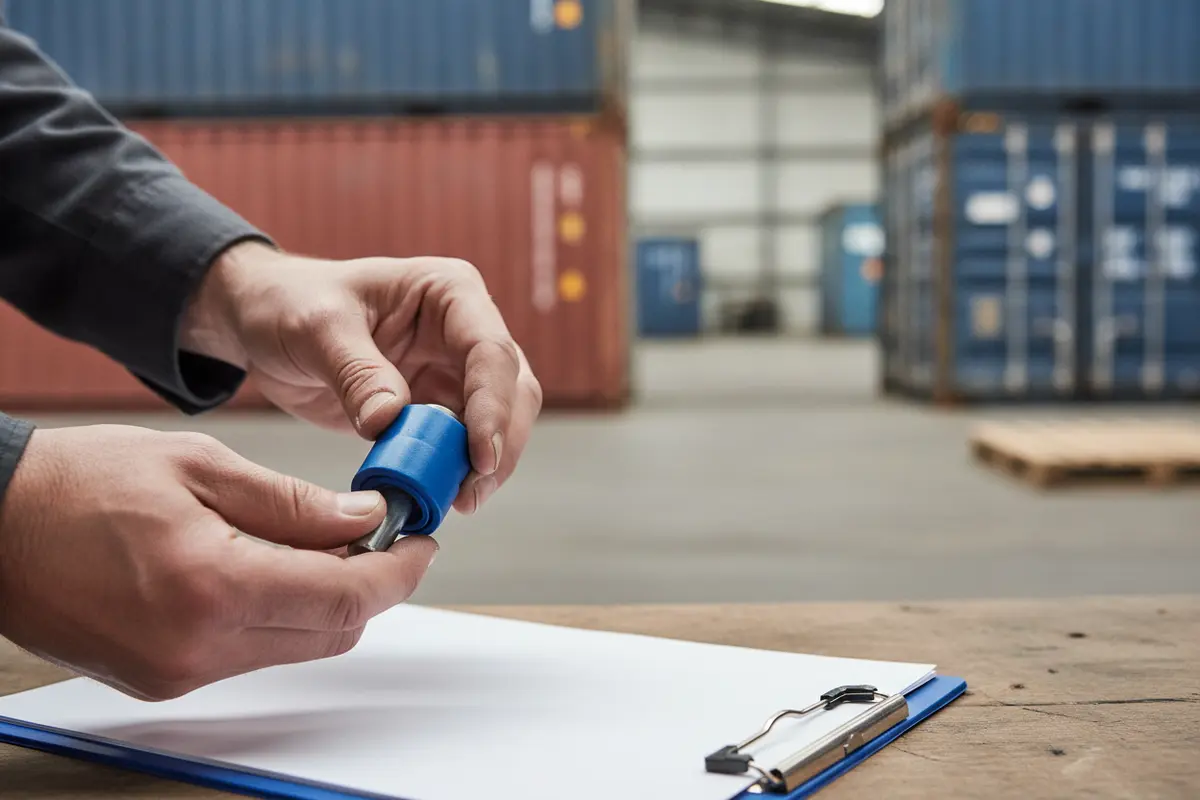
STiER's catalog includes bolt seals, cable seals, and plastic seals. Use the relevant product family as a shortlist, not as a replacement for an application review. When the closure or process is unusual, share its details with the supplier before requesting a final selection.
For a more direct comparison of two common cargo-seal formats, see this guide to bolt seals versus cable seals. The key is to select for closure compatibility and control needs first, then verify the required security level and documentation.
How do serialization and recordkeeping strengthen seal control?
A seal only supports a useful control when people can connect its identifier to a shipment or asset record. Before ordering, decide how serial numbers will be assigned, recorded, checked, and reconciled. Define who receives the seal stock, who issues each number, where the number is logged, and how unused or damaged seals are handled.
- Set the identifier requirements. Specify whether numbers must be unique, sequential, machine-readable, or paired with another reference. Confirm the format with the supplier before an order is approved.
- Establish custody at receipt. Reconcile received quantities and number ranges against purchase and receiving records. Restrict access to stock according to your own security procedures.
- Record application. At the point of sealing, record the identifier with the shipment or asset reference, date, location, and responsible process step as appropriate for your operation.
- Check at handoff and arrival. Compare the seal number and visible condition with the accompanying record. Escalate a mismatch, missing seal, or sign of tampering using the organization's established incident process.
- Close the record. Document removal or replacement and retain the record under your company's retention rules.
Use a simple exception path alongside the normal process. If a received seal range is short, duplicated, illegible, or damaged, quarantine the affected stock and document the discrepancy under your internal procedure before issuing seals from it. If a shipment arrives with a broken seal or a number that does not match the dispatch record, staff should preserve the relevant details and notify the designated operations or compliance contact. The procedure should tell employees what to record, whom to contact, and whether the shipment may proceed; do not leave those decisions to an informal judgment at the dock.
Inventory control matters too. Keep a record of starting and ending number ranges, quantities issued, and seals voided or destroyed. Reconcile remaining stock during replenishment or at a cadence that fits your operation. The goal is not to create paperwork for its own sake. It is to make it possible to explain which seal was assigned to a load and what happened when a seal was not used as planned.
Serialization options can help teams distinguish units and improve record matching, but customization is only useful when your systems and staff can capture the information accurately. Test the intended number length, barcode format, or color scheme in the actual receiving and dispatch workflow. STiER offers customization and serialization options; confirm the available configuration for your chosen seal and volume through a quote request.
For additional context on the relationship between cargo seals and program controls, review the guide to CTPAT seal requirements. Requirements and procedures can depend on your program and operation, so verify applicable guidance with your compliance lead.
What should an RFQ to a security seal manufacturer include?
A well-prepared request for quotation gives the manufacturer enough detail to respond with a relevant product and documentation package. It also helps your team compare like with like. Avoid sending only a requested quantity or a broad phrase such as high-security seal. Explain the use and identify the decisions that still need technical review.
- Application: State whether the seals will be used on shipping containers, trailers, trucks, valves, bags, or another closure.
- Required evidence: Identify any ISO 17712, CTPAT, customer, or internal procurement requirement you need to satisfy, and ask what product-specific documents the supplier can provide.
- Product and fit: Include the closure details, aperture or hardware constraints where known, environmental conditions, and preferred seal type.
- Quantity and schedule: Provide expected order volume, delivery destination, and timing. Ask the supplier to confirm current quote and fulfillment assumptions; do not infer price or availability from a generic catalog listing.
- Identifier and customization: Specify serial format, color, barcode, logo, or other requirements. Distinguish mandatory requirements from preferences.
- Documentation and support: Ask what will accompany the order, how product substitutions will be handled, and who can answer questions if your requirements change.
STiER uses quote-based pricing for its security seal products, with specifications and volume affecting the quote. Its bulk security seals RFQ guide can help procurement teams organize request details. You can also browse container and shipping seals or truck and trailer seals to identify relevant product families before contacting a supplier.
How can buyers avoid common supplier-selection mistakes?
The most common issue is treating a standard or certificate as a complete answer. A credible review checks the evidence, exact model, application, and internal handling process together. Watch for these avoidable gaps:
- Accepting a general claim without model-level evidence. Ask the supplier to identify the exact product covered by the documents.
- Assuming all seals are equivalent. Match the product to the closure and the security need. A flexible cable, a bolt, and an indicative plastic seal do not automatically serve the same purpose.
- Ordering customization before testing it. Confirm that employees and systems can read, scan, and record the chosen identifiers or markings.
- Ignoring downstream controls. A serialized seal does not create a reliable chain of custody by itself. Define issue, application, inspection, discrepancy, and closeout steps.
- Leaving substitutions undefined. Decide how a change in model, numbering, or configuration will be reviewed and approved before it affects an active order.
- Comparing prices without equivalent scope. Review model, documentation, customization, quantities, and delivery assumptions alongside the quote. Seal pricing is quote-based and can depend on the requirements.
A concise supplier file can include the approved product description, supporting records, quote and order confirmation, serial-number requirements, receiving procedure, and the name of the internal owner. This makes later replenishment and review easier, especially when procurement and operations are handled by different teams.
Request a quote for your seal specifications
Frequently asked questions about ISO 17712 seal manufacturers
Does an ISO 17712 claim apply to every seal a manufacturer sells?
Do not assume so. Ask for documentation tied to the specific model and configuration you plan to purchase, and confirm that it addresses your stated requirement. A supplier's broad credentials do not automatically establish the status of every product in its catalog.
Is a serialized seal automatically a high-security seal?
No. Serialization identifies a seal and can support recordkeeping, but numbering alone does not establish a seal's security classification. Confirm product characteristics and relevant documentation separately.
What information should I send when asking for a quote?
Share the application, closure type, required evidence, quantity, schedule, destination, identifier format, and any customization needs. Include photos or measurements when they help explain fit, and ask the supplier to flag any assumptions.
Can one seal type be used for containers, trailers, and valves?
Not necessarily. The closure geometry and control objective differ. Select a product for the specific application, then confirm compatibility and the required level of security with the supplier and your compliance team.
Ready to specify a seal program for your cargo?
Before placing an order, connect the standard evidence to the exact product, confirm fit for the closure, and define how serial numbers will be controlled from receipt through removal. A manufacturer review based on those practical checks can make procurement clearer and help your team maintain consistent records.
Contact STiER to review your security seal requirements
With a clear application, documented requirements, and an agreed control process, your team can choose seals that support its cargo-security procedures without relying on assumptions.