


Choosing seals for ISO container doors is not simply a matter of finding a device that fits through the latch. Logistics teams must match the seal to the door hardware, cargo risk, route, inspection process, and compliance records. The right choice creates visible tamper evidence and a traceable handoff without slowing the loading or receiving process. This guide explains how to evaluate the options and how they fit into a broader security seal program for shipping containers.
Request a customized quote for your ISO container door security program.
What Makes Seals for ISO Container Doors Different From Other Seals?
Direct answer: ISO container door seals must pass through the intended locking hardware, resist casual defeat, show evidence of interference, and support a reliable record of custody. For US-bound cargo managed under CTPAT, the evaluation also needs to address the current ISO 17712 high-security classification, unique identification, and supplier documentation.
A seal on an ISO container door performs two related jobs. First, it creates a physical barrier that makes unauthorized opening more difficult. Second, it creates a visible event if the seal is cut, removed, replaced, or altered. That evidence matters because a seal is part of a process, not a standalone theft-prevention device.
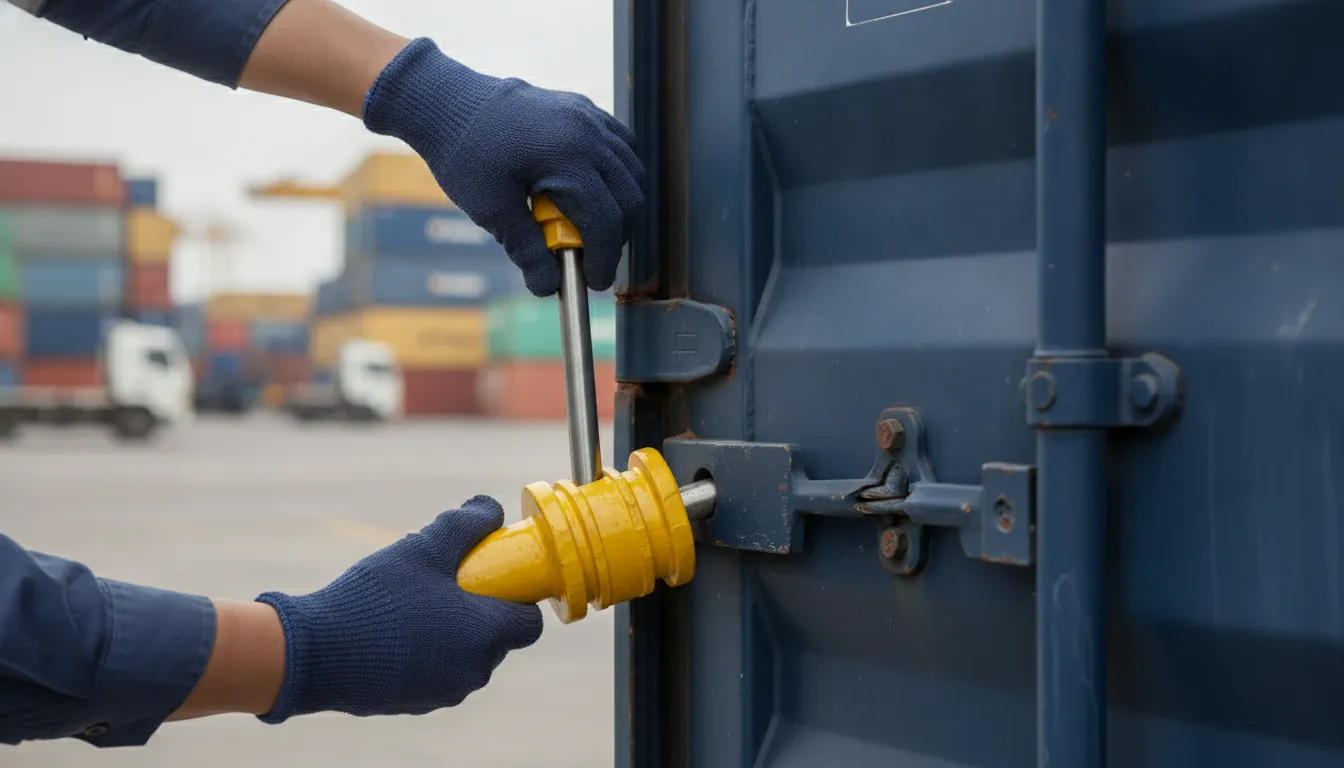
Start with the door hardware. Standard ISO container doors use locking bars and cams that place the seal through an aligned opening. A bolt seal is often the most direct fit because its steel pin and locking body are designed for this kind of closure. A cable seal can be useful when the available opening is irregular or when a flexible connection is needed, but the team must confirm that the cable can be routed without slack that weakens the control.
Also separate a mechanical freight-container seal from a weather gasket. A gasket keeps out water, dust, and drafts. A security seal provides tamper evidence and identification. They solve different problems and should not be evaluated as interchangeable products.
How Should Teams Match a Seal to the Container Door Hardware?
Direct answer: Match the seal to the exact latch opening, available clearance, installation motion, and approved removal method. Before buying in volume, test the seal on the container and door variants used by the fleet. Confirm that trained workers can apply it consistently and that receiving staff can inspect it without damaging the surrounding hardware.
A useful fit check has five parts:
- Opening and clearance: Measure the latch hole and the space around it. A seal that is too large may not pass through the hardware or may interfere with the locking bars.
- Application motion: Confirm whether the seal can be pushed, threaded, or looped into place without forcing the door or seal body.
- Removal control: Decide whether removal requires a designated cutter or another controlled tool. The procedure should identify who may remove the seal and where the tool is stored.
- Identification visibility: Make sure the serial number or barcode can be read while the seal is installed and during arrival inspection.
- Container variation: Test standard, high-cube, and older or repaired doors if all three appear in the network. One successful test does not prove universal fit.
STiER's BS-30C RSS bolt seal is designed for container and trailer door latches. Its galvanized low-carbon steel core, ABS covering, 8 mm steel pin, and 87 mm shaft are useful starting points for a fit trial. The published product information also specifies tool-required removal, numbering up to nine digits, barcode options, and a removable security sticker for document transfer. Confirm the final configuration and fit with the supplier before placing a production order.
Which Seal Types Work Best for ISO Container Doors?
Direct answer: High-security bolt seals are the usual starting point for standard ISO container doors because they combine a rigid barrier, controlled removal, and visible identification. Cable seals can serve irregular closures or adjacent access points. Indicative plastic seals are appropriate for lower-risk applications, but they should not replace an ISO 17712 high-security seal when the program requires one.
| Seal type | Best fit | What to verify | Typical limitation |
|---|---|---|---|
| High-security bolt seal | Standard ISO container and trailer door latches | ISO 17712 H classification, serial matching, fit, and controlled tool removal | Requires the right latch clearance and a planned cutting process |
| Fixed-length cable seal | Doors, trailers, tankers, and irregular access points | Length, cable diameter, breaking strength, routing, and serial visibility | Flexibility can create excess slack if the application is not standardized |
| Indicative plastic seal | Bags, light-duty closures, and internal tracking | Numbering, tamper indication, and whether the risk level permits hand removal | Not a substitute for a high-security container seal |
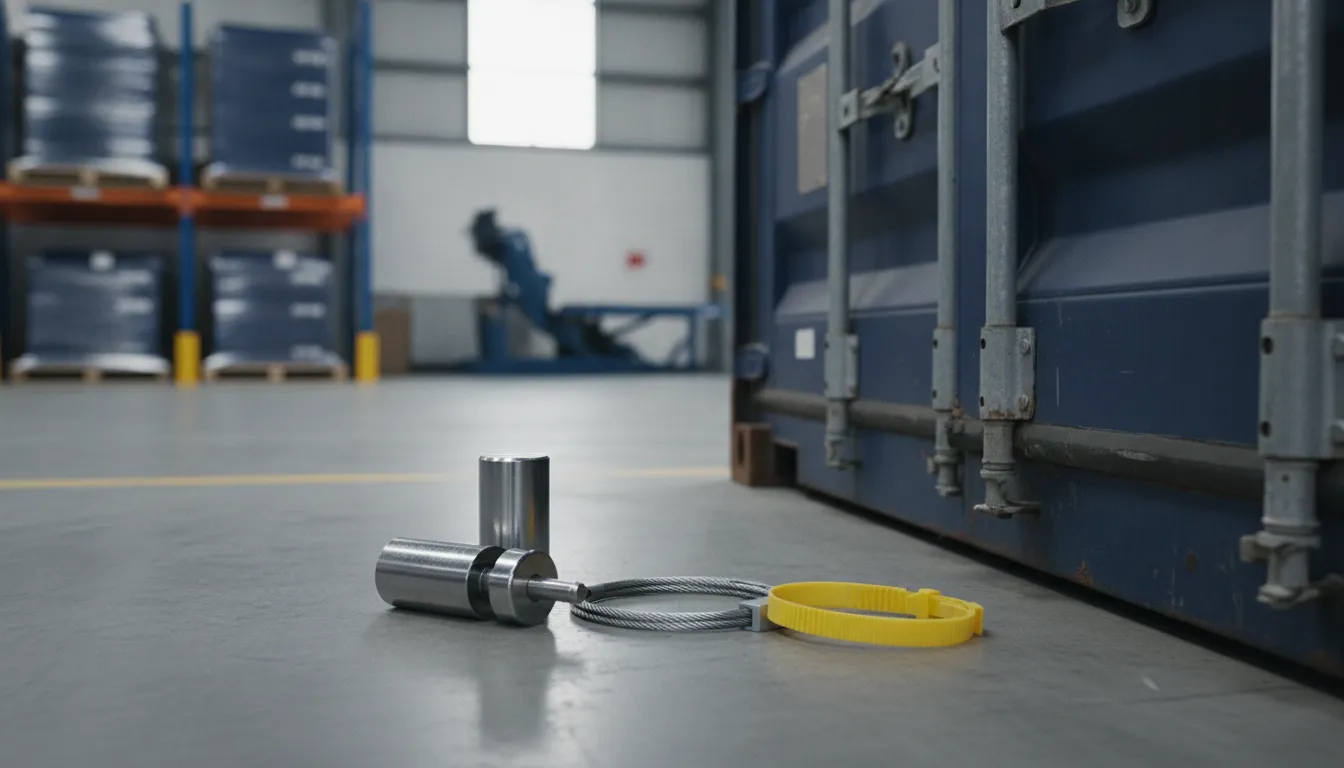
For buyers comparing options, STiER's bolt seal collection is the relevant starting point for standard container doors. The fixed-length steel cable seal CSL-1.8 is a different tool: it uses a 1.8 mm galvanized aircraft cable, a 220 mm length, a steel and ABS locking body, a stated 230 kg breaking strength, and tool-required removal. It can support doors and access points where a rigid bolt is not the most practical fit.
Do not choose a plastic indicative seal only because it is faster to apply. The DS-F is intended for light-duty tamper evidence, bags, postbags, IBCs, and similar applications. Its hand-removal design and 40 kg tensile strength place it in a different risk category from a high-security freight-container seal.
What Should Buyers Verify About ISO 17712 and CTPAT?
Direct answer: Buyers should verify the seal's classification, independent test evidence, manufacturer security practices, and tamper-indicative design. CBP guidance explains that CTPAT requires high-security seals for loaded containers bound for the United States and that the seals must meet or exceed the current ISO 17712 standard. Ask for current documentation rather than relying on a catalog claim alone.
ISO 17712 distinguishes three barrier-capacity classes: Indicative, Security, and High Security. A buyer evaluating an international container-door program should confirm that the selected product is the required H class when the shipment or customer standard calls for high-security protection. The ISO 17712 standard reference provides the authoritative starting point for the standard itself.
CBP's published guidance on ISO 17712 high-security seals also emphasizes independent confirmation. Ask the supplier to provide:
- A current product conformance certificate identifying the seal model and classification.
- Testing evidence from a laboratory accredited for the relevant work, such as ISO/IEC 17025 accreditation.
- Evidence that the manufacturer's security-related practices have been independently audited where required by the standard.
- Documentation of tamper-indicative features and the conditions under which the certificate applies.
- A clear explanation of how changes in materials, design, or production are controlled.
STiER positions its high-security bolt seals for ISO container doors and international freight, with CTPAT and ISO 17712 context supported by its compliance program. Customers should still request the documentation for the exact product configuration and intended use. A certificate for one model should not automatically be treated as a certificate for every seal in a supplier's catalog.
For a deeper explanation of the standard and the distinction between product strength and manufacturer controls, see STiER's ISO 17712 high-security seal certification guide.
How Do Serialization and Removal Controls Affect Audit Readiness?
Direct answer: Serialization turns a physical seal into a traceable control. Removal controls preserve the credibility of that record. The strongest program links the seal number to the shipment and container, records who applied it, verifies it at receipt, and documents any mismatch before cargo is unloaded.
A unique number is useful only when people use it consistently. At minimum, the seal log should connect:
- Shipment or booking identifier.
- Container number and door location.
- Seal model and unique serial number.
- Date, time, and location of application.
- Name or identifier of the person applying the seal.
- Arrival inspection result, including visible damage or mismatch.
- Exception notes, photographs, investigation status, and final disposition.
When a seal is cut at the receiving facility, the record should show the authorized reason, the person performing the removal, and the new condition of the door and cargo. A hydraulic or electric bolt-seal cutter can improve efficiency at a high-volume receiving operation, but the presence of a tool should never remove the authorization step. Tool access is itself a process control.
STiER supports serialized numbering, barcode integration, logo or text marking, and color coding across applicable product lines. Buyers should decide in advance whether the operation will scan barcodes, record numbers manually, or use both methods. The process must be realistic for the loading dock. A sophisticated requirement that workers cannot complete under time pressure will not produce reliable records.
Get a customized quote for serialized seals, barcode marking, and documented removal controls.
How Can Logistics Teams Build a Repeatable Door-Seal Process?
Direct answer: Build the process around a small number of approved seal configurations, a documented application check, controlled inventory, trained staff, and a receiving exception workflow. Standardization matters more than choosing the most complex product for every shipment.
- Define the risk tier: Identify cargo value, route exposure, customs requirements, customer commitments, and the consequences of a seal discrepancy.
- Map door hardware: Record the container and trailer door types in the network. Note clearance, latch openings, and any recurring fit problems.
- Approve the seal configuration: Select the seal class, model, length, marking, color, and removal method. Keep a written substitution rule for shortages.
- Control stock: Store unused serialized seals securely. Reconcile issued, voided, damaged, and returned numbers.
- Train the application team: Demonstrate correct closure, number recording, visual inspection, and escalation steps. Include photographs of acceptable and unacceptable applications.
- Verify at handoff: Compare the seal number and condition at each required transfer point. Do not treat a matching number as proof that the seal was never disturbed; inspect the body, pin, locking area, and surrounding door hardware.
- Review exceptions: Stop and document mismatches, damaged seals, unexplained replacement, or evidence of forced entry before normal unloading or release decisions.
This process should complement, not replace, the broader container security buying guide. The broader guide covers custody records and inspection discipline, while this article focuses on the product-selection decisions that determine whether the seal is practical for a specific ISO container door.
How Should Buyers Compare Suppliers Before Requesting a Quote?
Direct answer: Compare suppliers on product fit, evidence, serialization, customization, response quality, and total operating process. The lowest unit price is not a useful comparison if the seal requires rework, creates unreadable records, or lacks the documentation needed for a compliance review.
Send each supplier the same requirements so the quotes are comparable. Include the door or latch type, expected annual volume, target seal class, serialization format, barcode standard, colors, packaging, delivery regions, and removal process. Ask the supplier to identify any assumptions that could change the recommendation.
STiER uses a quote-based model for many seal products, which is appropriate when the buyer needs custom numbering, barcodes, colors, cable lengths, logo marking, or volume planning. The request should state whether the team needs the BS-30C RSS bolt seal, the CSL-1.8 cable seal, or a different configuration. If the application spans containers, trailers, tankers, or internal access points, ask for a product matrix rather than forcing one seal into every use case.
Before approval, confirm the quote includes the product model, seal class, marking details, packaging, lead time, documentation package, and any minimum order quantity. Ask who will answer technical fit questions after delivery. A supplier that can explain the difference between a high-security seal, a flexible cable seal, and an indicative seal is more useful than one that simply labels every option as suitable for containers.
Request a STiER quote for your container-door seal specifications and volume.
Frequently Asked Questions About ISO Container Door Seals
What is the most common seal for an ISO container door?
A high-security bolt seal is a common choice for standard ISO container doors because it fits the locking hardware, provides a rigid barrier, supports unique serialization, and can require a controlled tool for removal. Confirm the exact latch clearance and the documentation required for the shipment before ordering.
Are cable seals suitable for shipping container doors?
Cable seals can be suitable when the closure is irregular or when flexibility is necessary, but the cable must be routed tightly and inspected consistently. Confirm length, breaking strength, serial visibility, and whether the application requires an ISO 17712 high-security classification.
Does CTPAT require an ISO 17712 high-security seal?
CBP guidance states that CTPAT security criteria require a high-security seal on loaded containers bound for the United States and that seals must meet or exceed the current ISO 17712 high-security standard. Buyers should verify current certificates for the exact product and supplier.
What information should be recorded when a seal is applied?
Record the shipment or booking identifier, container number, seal model, unique serial number, application date and location, the person applying it, and any inspection or exception notes. Photos can strengthen the record when cargo risk or customer requirements justify them.
Can an indicative plastic seal replace a high-security container seal?
No. An indicative plastic seal can provide useful tamper evidence for lower-risk closures and internal tracking, but its hand-removal design and lower strength place it in a different class of use. Do not substitute it when the cargo program requires an ISO 17712 high-security seal.
How Can You Standardize Seals for ISO Container Doors?
The best seal program is the one that workers can apply correctly, receiving teams can inspect quickly, and compliance staff can document later. Define the approved product, confirm fit on the actual door hardware, use serialization consistently, and retain the documentation that supports the selected classification.
Talk with STiER about the right seal configuration for your ISO container doors.