


Trailer security seals help a fleet make unauthorized access more visible and give each handoff a recordable checkpoint. A seal is not a substitute for a lock, a sound trailer, or a controlled operating process. The strongest programs match the seal to the access point, record its unique number, check it at each transfer of custody, and define what staff must do when something does not match.
Review your trailer seal requirements with STiER
What role do trailer security seals play in fleet operations?
A seal is a tamper-evident control placed across an opening, such as trailer-door hardware. It can help a receiving or dispatch team identify a broken, missing, substituted, or inconsistent seal. Its serial number also gives staff a reference to compare with shipping paperwork and the seal log.
A seal does not prove that a load was never accessed, nor does an intact seal guarantee that cargo is safe. It is one part of a layered procedure: secure the doors, apply the right seal, document the number, inspect at handoffs, and investigate exceptions. A physical lock serves a different purpose by restricting access; fleets may use both when the cargo, route, or operating procedure calls for separate deterrence and tamper evidence.
For a broader look at cargo controls, see STiER's guide to CTPAT seal requirements. Requirements can depend on the program and shipment context, so teams should confirm applicable obligations with their compliance lead rather than treating one seal choice as a universal rule.
How should a fleet select the right seal for a trailer?
Start with the door hardware and the task the seal must perform. A seal should fit the access point, remain legible and identifiable during transit, and be practical for staff to apply and verify. For a trailer door configured for a bolt seal, teams commonly consider a high-security bolt-style option. Cable seals can suit access points where the cable's routing flexibility is useful. A seal that cannot be fitted correctly or read during inspection creates avoidable process friction.
Match the seal specification to the shipment and written security requirements. If a program calls for a high-security seal certified to ISO 17712, verify the actual product documentation and certification status; do not infer compliance from appearance, marketing language, or a supplier category alone. The U.S. Department of Agriculture's acquisition regulation, for example, specifies traceable, tamper-evident commercial seals or high-security seals for certain covered cargo contexts. That rule is not a universal requirement for every trailer shipment, but it illustrates why buyers should check the governing specification. See the Agriculture Acquisition Regulation for its specific context.
| Selection factor | What to check | Operational question |
|---|---|---|
| Door hardware | Seal can be installed through the intended latch or hasp without improvised routing | Can staff apply and inspect it consistently? |
| Security specification | Required seal type, standard, and supporting documentation | What do the customer, contract, or program rules require? |
| Identification | Unique number is visible, durable enough for the trip, and recordable | Can the number be read and checked at each handoff? |
| Removal and disposal | Authorized staff have the right process and tools to remove it | How is the removed seal accounted for? |
| Order configuration | Serialization, marking, and quantity fit the fleet's workflow | Will the shipment arrive with specifications documented? |
Use the table as a starting point, then test candidate devices on the trailer types in your fleet. For example, a seal that fits one manufacturer's latch may be awkward on another door assembly. Have a dispatcher or driver install a sample according to the intended procedure, then ask someone unfamiliar with the application to locate and read its number. If it takes special positioning, unusual force, or several attempts to make the device secure, document the issue before placing a large order.
Compare the intended application before ordering. STiER's trailer and transport seal options include a relevant starting point, while its cable seal collection can help teams assess flexible cable configurations. For a direct comparison of two common categories and their tradeoffs, review bolt seals versus cable seals. Confirm fit and specification against the actual hardware and requirements before standardizing a type.
What should a trailer seal log capture?
A seal log connects the physical device to the load, trailer, people, and transfer events. Decide which fields are required and make the record at the time the seal is applied or checked, not from memory at the end of a shift. Keep the process simple enough for dispatchers, drivers, and receiving staff to follow consistently.
- Shipment identity: shipment or load reference, trailer identifier, and route or destination as appropriate.
- Seal identity: the full serial number, seal type, and any required product or batch reference.
- Application record: date and time, location, name or unique identifier of the person applying it, and a note that the door was secured before sealing.
- Handoff checks: time and location, seal number observed, seal condition, and the staff member completing the check.
- Exceptions: discrepancies, damage, photographs where permitted by policy, notifications, decisions, and final disposition.
- Removal record: who removed the seal, when and where it was removed, and how the removed device was handled under company procedure.
Keep the log's source of truth clear. If teams use paper forms, a transport-management system, or another digital record, define where the completed entry lives and who may correct it. Make changes traceable: retain the original entry, identify who made a correction, and record when it was made. Avoid recording only a partial number or relying on a photo as the sole record if staff are required to enter the number.
Make each field purposeful. A trailer ID helps reconcile the record if a load number is reused or entered incorrectly; an application location can distinguish the shipper's yard from a cross-dock. If one person applies the seal and another verifies it, capture both actions rather than using one signature to imply two checks. For a paper form, leave enough room to write the full serial without compressing digits. For a digital form, test it on the device staff actually use and make required entries obvious.
Serialization is useful only when teams consistently connect the number to the shipment and control unused stock. Assign seals through an accountable process, limit access to inventory as appropriate, and reconcile issued, applied, unused, damaged, and removed devices. For help specifying a volume order, STiER's bulk security seals RFQ guide outlines details buyers can prepare for a quote request.
Set a regular reconciliation cadence that fits the operation, and identify who reviews the count. The review can compare stock received with stock issued and the records showing seals applied, voided, or held back. A damaged seal should not quietly return to usable inventory, and a serial number that was entered incorrectly should be corrected with a traceable note rather than erased without explanation. These controls help teams spot gaps in records and maintain confidence that the number assigned to a load refers to the device actually used.
How can teams inspect seals at handoffs?
Build the check into the handoff rather than treating it as an optional visual glance. The person receiving custody should compare the seal number on the trailer with the shipment record before accepting the load or proceeding under the company's exception procedure. CBP's Recommended Seal Procedures Including Best Practices provides a reference for seal procedures in supply-chain activities.
- Confirm the unit. Match the trailer and shipment identifiers to the paperwork or approved system.
- Observe before touching. Look for an absent seal, visible damage, altered markings, unusual placement, or signs that the latch or door may have been manipulated.
- Read the full serial number. Compare every character with the number recorded for that shipment. Resolve illegible digits rather than guessing.
- Record the check. Enter the observed number, condition, date and time, location, and checker according to the operating procedure.
- Escalate before breaking custody. If the seal is missing, damaged, or inconsistent, follow the exception plan before opening or moving the trailer, unless an immediate safety need requires action.
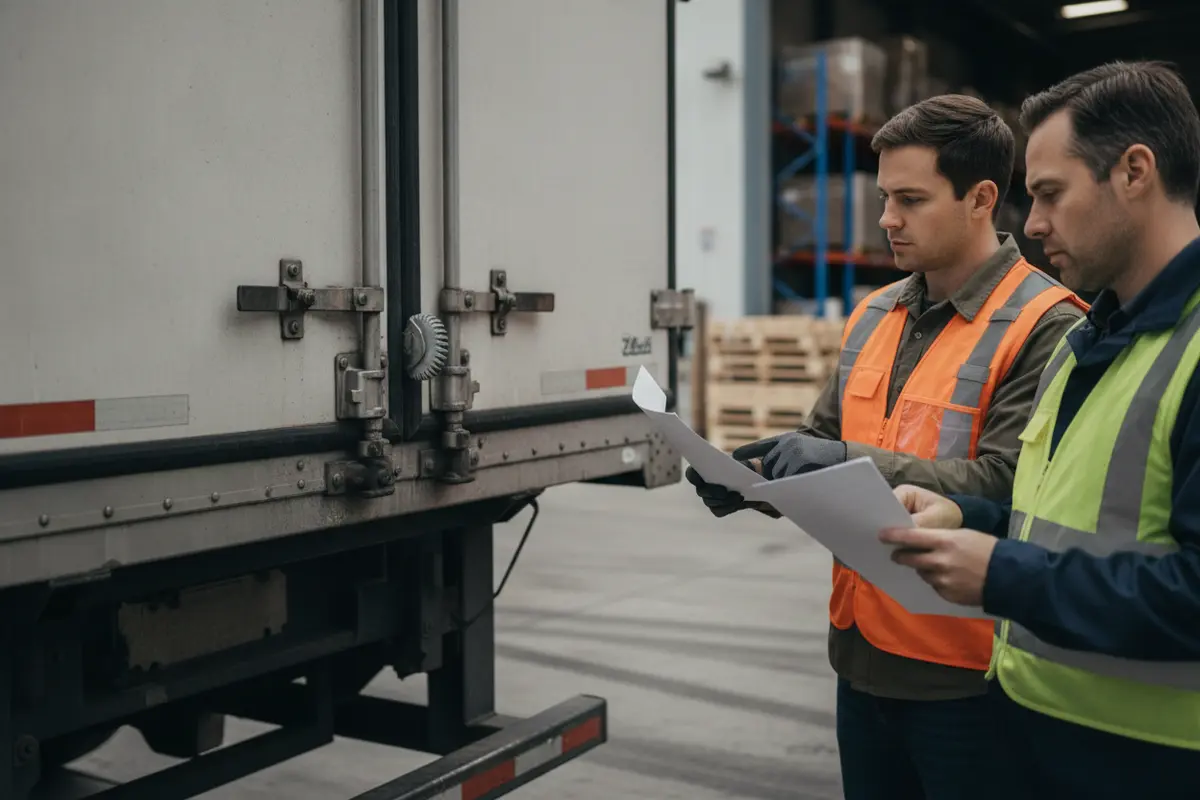
Where a route includes multiple stops, make it clear who owns each check and what happens if a planned checkpoint is missed. A repeatable handoff record helps explain where an exception was first observed; it does not by itself establish when or why tampering occurred.
Define the timing of a check around the actual custody change. A driver may need to verify a seal before leaving a shipper, while a receiver may compare the number before accepting or opening the trailer. If a site cannot complete a check because of weather, congestion, limited access, or an urgent safety issue, give staff a way to record the reason and notify the next responsible person. Do not ask employees to climb, reach into unsafe areas, or delay an emergency response to inspect a seal. A practical procedure explains what can be checked safely and who decides the next step when it cannot.
Be specific about how to inspect, but avoid instructions that require staff to alter the seal. A visual check should focus on the seal's presence, the condition of its body and attachment point, the visible identifier, and whether it appears to be in the expected position. If lighting makes a digit difficult to read, staff can use an approved light or move to a safe, better-lit area when practical. They should not pull, bend, or test the device in a way that may damage it or compromise evidence. If the number still cannot be read, treat that as a documentation exception and contact the designated person for direction.
Review container and shipping seals if your procedures cover more than trailer doors. For fleets that also need a physical lock at a trailer connection, compare the separate application of a kingpin trailer lock. A lock and a seal address different control needs; neither should be treated as a replacement for the other's function.
Talk with STiER about seal fit and serialization
What should staff do when a seal is missing or does not match?
Have a written escalation sequence available to drivers, dispatch, and receiving teams. Staff should not have to decide alone whether a discrepancy is harmless. The sequence should identify the internal contact, customer or compliance notification path, documentation requirements, and who may authorize opening or releasing the load.
- Pause routine acceptance or unloading while following the organization's safety and cargo-control procedure.
- Keep the trailer and load in a safe, controlled location when feasible; do not put a person at risk to inspect or preserve a seal.
- Record what was observed, including the seal's condition and visible number, location, time, trailer identity, and people present.
- Photograph the condition if policy and local conditions permit, without disturbing evidence unnecessarily.
- Notify the designated supervisor, security contact, customer, or compliance owner promptly, using the agreed escalation channel.
- Document the decision, any authorized seal removal or replacement, and the new seal number before the shipment proceeds.
For example, if a receiver sees a seal number that differs from the dispatch record, the first action is not to guess which number is correct. The receiver should note the full number physically present, confirm the trailer and load identity, preserve the seal condition as safely possible, and contact the assigned supervisor. The supervisor can then compare the dispatch entry and any prior handoff records, notify the required parties, and document the decision to hold, inspect, reseal, or release the load. If an authorized person replaces the seal, record both the removed and replacement numbers and who approved the change.
Do not make an unsupported conclusion from a broken seal alone. A broken or inconsistent seal is an exception that warrants the defined investigation and recordkeeping process; it does not, by itself, explain what happened to the cargo. Follow customer instructions, contract terms, and applicable reporting requirements, and preserve records in accordance with company policy.
How can a fleet make seal controls repeatable?
Write a short procedure that covers seal selection, controlled storage, application, logging, handoffs, discrepancy escalation, and removal. Use the same field names and basic steps across locations where practical, then train staff on the specific device and paperwork used at their site. Include a way for teams to report a seal that does not fit the hardware or whose serial number is difficult to read.
Test the workflow with a sample dispatch and receipt. Can the receiving team find the correct seal number quickly? Does the procedure identify who is responsible when one facility is closed or a driver changes? Are unused seals accounted for? Does the escalation contact know what information to collect? A brief operational review can uncover gaps before they cause delays during an actual exception.
Run the test with the people who will actually perform the checks, not only the person who wrote the procedure. Have one team member apply a seal and complete the dispatch record, then give the shipment details to someone who did not watch the application. Ask that person to identify the expected number and explain what to do if the observed seal differs. This simple handoff exercise reveals whether the record is easy to locate and whether the escalation path is clear across shifts.
Review exceptions periodically for recurring process problems. Examples include incomplete serial numbers, repeated illegible markings, missing handoff entries, seals stored without clear accountability, or uncertainty about who can authorize removal. Look for practical corrections such as adjusting a form, clarifying responsibility, or refreshing training. A review should improve the process without assuming that every exception indicates theft or intentional misconduct.
Before standardizing a seal, confirm how procurement specifications translate into daily work. Ask whether the product can be used on the fleet's actual latch, whether the requested serialization or marking is specified in the order, what documentation accompanies it, and how staff will check it in low light or under time pressure. Record approved substitutions rather than allowing each location to choose an unreviewed alternative. For larger or recurring requirements, provide expected quantities, delivery timing, seal type, and customization needs when requesting a quote.
For a useful procurement handoff, give purchasing and operations the same written specification. Include the intended application, required seal category or standard if applicable, numbering format, any marking requirements, estimated volume, and delivery schedule. Operations can confirm whether the proposed device fits the workflow; procurement can make sure the approved specification appears on the order and its supporting documents. If an alternative is needed because of supply or fit, route it for review before staff start using it. This prevents a product substitution from silently changing the assumptions in a security procedure.
For fleets that need a combined seal-and-lock approach, separately define where each device is used and who controls its key or removal tool. STiER offers shipping container and trailer locks as a distinct category. Teams should align hardware, seals, documentation, and staff instructions to the actual trailer configuration and route risks, rather than adding devices without a corresponding process.
Request help planning your trailer seal program
Frequently asked questions about trailer security seals
Are trailer security seals the same as trailer locks?
No. A seal is primarily a tamper-evident identifier used to show whether an access point may have been disturbed and to support a record check. A lock is intended to restrict access. Some operations use both, based on their procedure and risk assessment.
Should every trailer use a high-security bolt seal?
Not necessarily. The right choice depends on the door hardware, shipment requirements, route procedure, and any applicable customer or program specification. Confirm whether a particular standard or seal type is required before purchase.
What should a driver do if the seal number does not match?
Follow the company's discrepancy procedure, notify the designated contact, and document the observed number and condition before proceeding when it is safe and practical to do so. Do not guess at an unclear digit or remove the seal unless the procedure or an immediate safety need calls for it.
Can a seal log replace a physical inspection?
No. The log records what staff report checking; it does not show the current condition of the seal. Teams should compare the physical seal and its number with the shipment record at the required checkpoints.
Ready to review your trailer seal requirements?
A reliable trailer seal program ties the right device to a specific opening, records each serial number, and gives every handoff a clear check and escalation path. Review your hardware, shipment requirements, and operating procedure together so staff can apply, verify, and account for seals consistently.
Contact STiER to discuss your trailer security seal requirements
With a practical procedure in place, fleet teams can make seal checks a consistent part of dispatch, transit, and receipt.