


Heavy duty cable seals can help commercial cargo teams secure access points that need a flexible sealing length or a cable routed through irregular hardware. The right choice depends on the opening, the required level of tamper evidence, handling conditions, and how the seal number will be controlled. This guide explains what to evaluate before selecting heavy duty cable seals and how to build a clear specification. For broader context on container security, see STiER's shipping container security seal guide.
Discuss your cable seal requirements
What makes a cable seal suitable for commercial cargo?
A cable seal consists of a cable that passes through an opening and a locking body that secures the cable in place. Compared with a fixed-length seal, a cable design can offer more flexibility in how the cable is routed. This is useful when the point to be sealed has a different shape or usable span from a standard door hasp.
Suitability is not a matter of choosing the thickest cable by default. A seal must fit the access point, be applied consistently, and support the security process around the load. Consider how it will be installed, checked, recorded, and removed at destination. The seal is one control within a broader cargo-security plan, not a substitute for sound loading practices, access control, or inspection.
Teams evaluating a seal for shipping containers can also review the container security guide alongside the specific requirements of their route and operating procedure. If the opening is a trailer door or other transport access point, compare the use case with STiER's trailer and transport seals collection.
When should a team consider a heavy duty cable seal?
A cable seal may be worth evaluating when teams need a seal to pass through an opening that is awkward, offset, or too large for a short fixed-length design. It can also be considered when one operation uses several kinds of access points and wants a seal format that can be routed through different hardware, subject to fit and the product specification.
Start with the cargo and the exact place where a seal will be installed. Identify whether the point is a container door, trailer door, hatch, valve, or another access opening. Inspect the hardware and note the available route through the hasp or fitting. Measure the span needed to route and close the seal without forcing it or leaving an unnecessarily loose loop.
Then consider the consequences of unauthorized access and what your customer, carrier, or compliance procedure requires. Some shipments may require a specific seal class or documentation. Do not assume that a cable seal is suitable for a particular regulated shipment based on its appearance or cable thickness. Confirm the exact product certification and its supporting documentation for the intended use.
STiER's cable seal range provides a starting point for comparing cable-style options. For other cargo applications, buyers can review the container and shipping seals collection or the 3PL and supply chain security collection.
Which specifications matter when comparing cable seals?
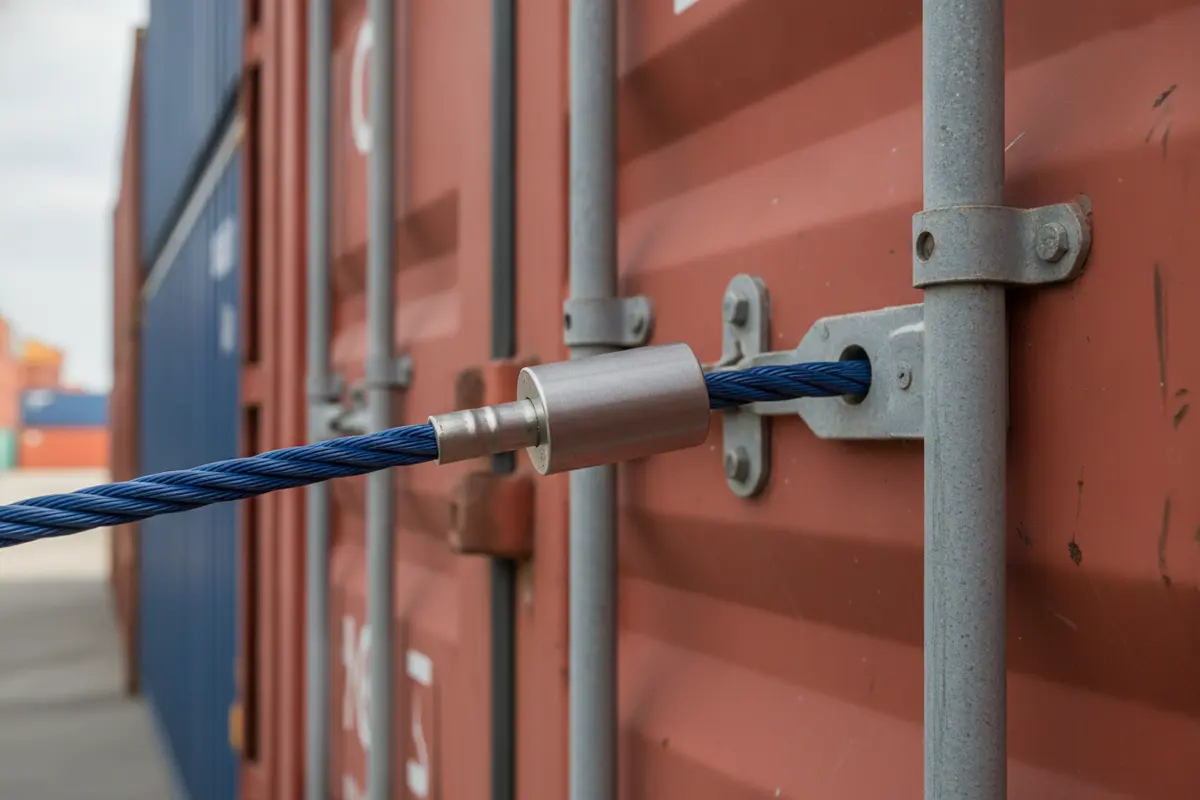
Compare products against the conditions at the access point and the controls your operation must maintain. A useful review covers construction, cable dimensions, usable length, locking method, identification options, and any documented security or compliance requirements. Use the product specification and supplier documentation for exact values rather than inferring performance from a product name or photograph.
| What to compare | Why it matters | What to confirm |
|---|---|---|
| Cable diameter and construction | Must fit the hardware and match the operating requirement. | Specified diameter, material, and product documentation. |
| Usable cable length | Determines whether the seal can reach through the opening without poor fit. | Required routing path and available clearance at the access point. |
| Locking body and application | Influences how the seal is installed and how teams inspect it. | Installation instructions and any single-use or removal procedure. |
| Identification and serialization | Supports matching a physical seal to shipment records. | Number format, legibility, sequence control, and customization options. |
| Security classification and evidence | Buyer requirements may call for a documented standard or specific class. | Exact model, current certificates, and scope of the supporting documents. |
| Order and replenishment needs | Volume and timing can affect how the order should be planned. | Quantity, delivery schedule, packaging, and quote terms. |
For a side-by-side review, compare each candidate against the same access point and record the specification source. Do not treat cable diameter alone as proof of a seal's security level. A compliance requirement should be tied to the exact product and current documentation. When an applicable requirement references a standard, verify the standard and its scope with the relevant issuing organization; the International Organization for Standardization provides information about ISO standards.
How do cable seals compare with bolt and plastic seals?
Each seal format has a different fit and operating profile. A bolt seal is commonly considered for compatible container or trailer hasps where its rigid bolt-and-body design fits the hardware. A cable seal can provide a flexible routing option. A plastic seal may fit applications that need an indicative, tamper-evident control rather than a high-security seal. The final choice depends on the stated requirement and the precise product specification.
Use a comparison to focus discussion with operations and procurement, not as a substitute for the product's documented limits:
- Cable seal: evaluate when a flexible route or a particular cable span is needed. Confirm the fit, cable specification, locking instructions, and required certification.
- Bolt seal: evaluate when compatible hardware and the shipment requirement call for a rigid bolt-style seal. Confirm the correct fit and the exact model's documentation.
- Plastic seal: evaluate for appropriate indicative applications where the procedure calls for a visible tamper-evident device. Do not assume it meets a high-security requirement.
STiER's bolt seals versus cable seals guide can help teams structure that comparison. Review the relevant bolt seal collection or plastic seal options only after defining the access point and control requirement. For seals used in cross-border processes, the customs and cross-border CTPAT collection is another relevant place to review product options.
How should teams manage seal numbers and application?
A seal offers limited value to a verification process if no one records its identifier or checks it at the handoff. Establish a simple, repeatable procedure before the first shipment. Assign responsibility for receiving, storing, applying, recording, inspecting, and reconciling seals. Limit access to unused inventory and maintain records that connect each seal number to the correct load or shipment record.
- Inspect the seal before use. Check that the cable and locking body appear intact and that the identifier is legible. Set aside any damaged or unclear seal rather than applying it.
- Confirm the access point. Verify that the seal is routed through the intended hardware and that the cable length is suitable. Follow the product's directions; do not improvise an installation that bypasses the locking mechanism.
- Apply and test as directed. Secure the seal according to its instructions. Make a visual check that it is engaged and cannot be removed without the expected evidence of tampering. Do not alter or reuse a seal unless the product instructions explicitly allow it.
- Record the identifier at dispatch. Enter the seal number in the shipment record with the load reference, date, responsible person, and any additional fields your procedure requires.
- Verify at each handoff. Compare the number on the seal with the record and inspect for visible damage, substitution, or interference. Record exceptions before proceeding.
- Close the loop after removal. Record the destination check and removal or replacement as appropriate. Reconcile unused seals and investigate gaps in the sequence.
These steps are operational guidance, not a replacement for customer, carrier, regulatory, or CTPAT procedures. Consult the official U.S. Customs and Border Protection site for current CTPAT program information and requirements. Confirm what applies to your company's participation and shipment.
What should buyers ask about certification and documentation?
Ask the supplier to identify the exact model offered and provide documentation that corresponds to it. The document should make it possible for the buyer to confirm the product identity, the applicable standard or classification, and the scope and validity of the evidence. If a product is customized, serialized, or substituted, verify that the documentation still applies to the delivered model and configuration.
A buyer can prepare questions such as:
- What is the exact product name and specification?
- What cable diameter and usable length are available for the required application?
- What serialization, barcode, marking, or color options can be quoted?
- What certificate or test documentation is available for this specific product?
- Does the evidence cover the version and configuration proposed in the quote?
- What application and inspection instructions should be provided to receiving locations?
STiER is a specialized provider of serialized security seals and tamper-evident solutions. Its company information describes ISO 17712:2013 high-security seal certification and ISO 9001:2015 quality management; buyers should still confirm the applicable certification and supporting documentation for the particular seal under consideration. For background on CTPAT seal expectations, see STiER's CTPAT seal requirements guide. A requirement should always be verified against current official program materials and the product's own documents.
Ask STiER about product specifications and documentation
What selection mistakes can create problems after an order?
Several avoidable gaps can make an otherwise reasonable seal purchase harder to use consistently. The first is choosing from the seal name or a photograph without checking measurements. A cable that does not reach the required route, or a locking body that does not work with the fitting, can delay a shipment or invite a hurried workaround. Record the actual access-point dimensions and confirm the proposed product against them before approving the order.
A second risk is treating one specification as a complete description of security. A heavy-duty label, a large cable diameter, or a custom number does not by itself establish a certification or prove that a seal meets a customer requirement. Ask for product-specific documentation and check that the model in the quote is the one covered by that evidence. If a specification is unclear, resolve it with the supplier and your compliance owner before the order is released.
Operations can also run into trouble when identifiers are not planned for the records that will use them. If teams receive seals without a clear numbering format, sequence control, or process for handling unused units, dispatch and destination staff may not be able to reconcile the shipment quickly. Agree on how identifiers will be captured and checked before placing a custom or volume order.
- Do not order solely from an informal product description; confirm the exact model and specification.
- Do not assume one seal type fits every door, hatch, or valve; check each access point in use.
- Do not let sales or compliance paperwork become detached from the delivered product; retain documentation with purchasing records.
- Do not introduce a seal without briefing the people who apply it and inspect it at handoff.
A short pre-order review with procurement, security, compliance, and the receiving operation can uncover these issues early. It also helps define what a successful trial looks like: fit at the intended opening, clear application instructions, readable identifiers, and records that reconcile from dispatch to receipt.
What should an RFQ for heavy duty cable seals include?
A detailed request for quotation helps a supplier recommend an option that fits the application and respond with fewer clarification steps. Include the facts needed to evaluate fit, compliance, identification, and order planning. Avoid relying on a generic description such as "heavy duty" alone; give the supplier the actual operating conditions and requirements.
- Describe the shipment and access point. State whether the seal will be used on a container, trailer, or other cargo access point. Include a description or clear photo of the hardware if helpful, without exposing sensitive shipment information.
- Provide measurements. Share the required routing span, clearance, and any relevant opening dimensions. Ask the supplier to confirm suitability against the product specification.
- State the security and compliance requirement. Identify customer, program, or standard requirements and request documents for the exact proposed model. Do not assume a particular certification based on the broad product category.
- Specify identification needs. Include quantity, serialization format, sequence requirements, branding or marking requests, and any barcode needs. Explain how the seal identifier will connect to your records.
- Give order planning information. Include expected volume, requested delivery timing, destination, packaging preferences, and whether repeat replenishment is likely. Pricing for quote-based products depends on the request and order details.
- Ask for implementation details. Request application instructions, inspection guidance, and any relevant documentation that receiving teams need at handoff.
With those details, procurement can compare options on fit and documented requirements rather than on a description alone. Operations can then validate the proposed seal at the actual access point before standardizing it across a fleet or lane. If a change in hardware, route, or compliance requirement occurs, review the seal specification again.
Send STiER your cable seal RFQ details
What questions do buyers ask about heavy duty cable seals?
Are heavy duty cable seals right for every cargo door?
No. The cable must fit the opening and its locking body must be suitable for the hardware and procedure. Check the access point, available route, seal instructions, and any required security classification before ordering.
Does a thicker cable automatically mean a more secure seal?
No. Cable diameter is only one specification. Buyers should verify the exact product's construction, locking design, stated classification, and current supporting documents. Do not infer certification or security performance from appearance alone.
Can a cable seal be used for a CTPAT shipment?
That depends on the applicable program and shipment requirements and on the documentation for the exact seal model. Check current official CTPAT guidance and confirm product-specific evidence before selecting a seal.
What information is most useful for a quote?
Provide the access point and measurements, required cable length or routing needs, security and compliance requirements, quantity, serialization details, and requested delivery timing. Include product documentation requirements so the proposal can be evaluated accurately.
Request a quote for your cargo sealing needs
How can a team choose a suitable cable seal?
Start with the actual access point, define the handling and compliance requirements, and compare documented product specifications against them. Build a process for controlling numbers, applying seals, and recording inspections so the seal can be checked throughout the shipment. When those needs are clear, request a quote with the necessary measurements, volume, identification options, and documentation requirements. STiER's security seal guide for shipping containers offers a related reference for cargo teams reviewing their broader sealing approach.